
Eight overs in Mount Maunganui told a difficult story about Kuldeep Yadav’s rhythm. His omission from the Test squad told a much bigger one about India’s plans for a bowler capable of changing a game.
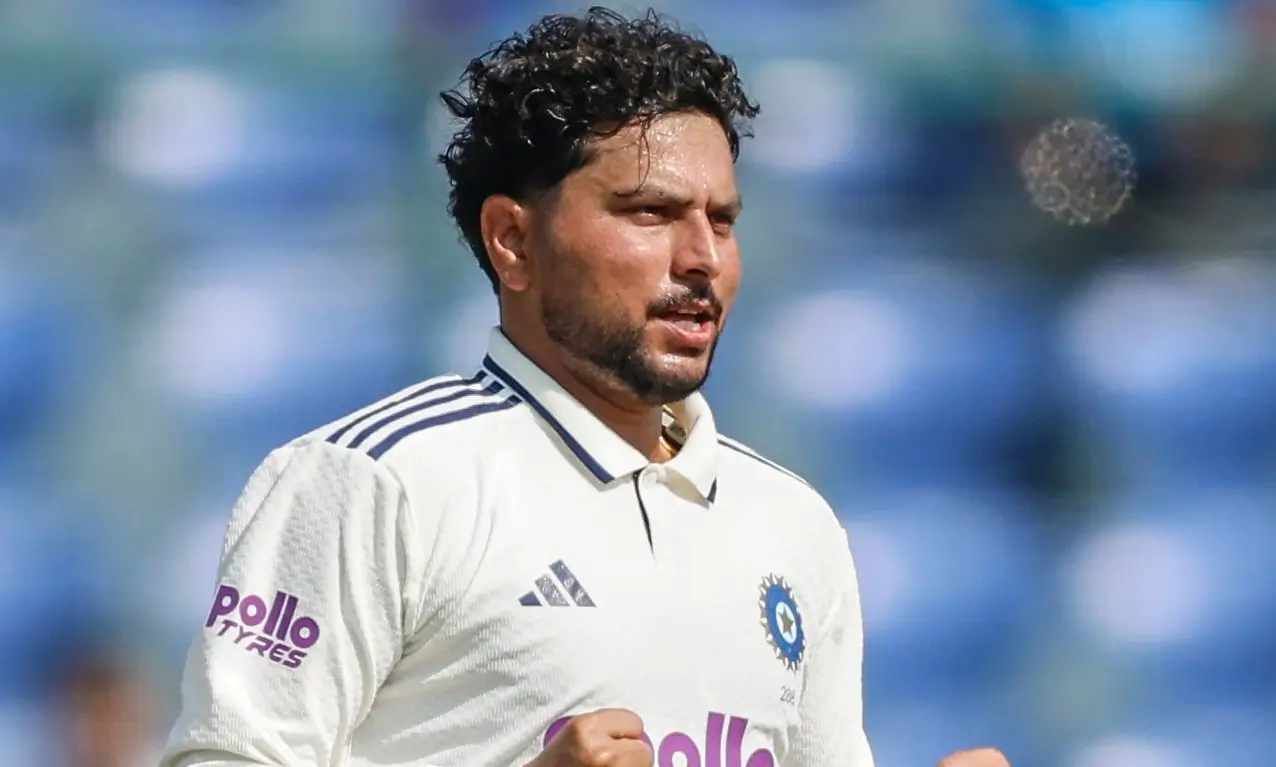
India had a wrist-spinner in all three squads for the New Zealand tour, yet by the weekend before the Tests, Kuldeep Yadav’s most revealing contribution was an uncomfortable statistical line: eight overs, 73 runs, no wickets. Within a day of that innings, India announced he would be released from the Test squad. A selection decision that may be reasonable on tactical grounds nevertheless underlines a genuine problem: a specialist whose best cricket depends on rhythm has spent too much of the tour searching for an opportunity to find it.
The temptation is to turn the issue into an argument over one expensive spell. That would be too easy. Kuldeep did not bowl well at Bay Oval, and New Zealand exploited his errors ruthlessly. But the more consequential question is whether India are preserving a match-winning option or allowing him to become a contingency player who rarely plays enough to be match-ready.
Match: New Zealand vs India, fourth ODI, Bay Oval, November 13, 2026.
From All-Format Selection to a Narrower India Role
Selection across formats suggests a player belongs in a national team’s long-term thinking. Selection without playing time suggests something else: insurance. Kuldeep arrived in New Zealand carrying the first kind of status but spent most of the white-ball leg experiencing the second. He missed all five T20 internationals and the first three ODIs before receiving his opportunity in the fourth match.
On November 14, the BCCI confirmed that fast bowler Gurnoor Brar had been added to the Test party and Kuldeep would return to domestic cricket. The board said the change was intended to provide him playing opportunities in India. It did not say the decision was a disciplinary response to the fourth ODI, and that distinction matters. Squad balance in New Zealand is a credible explanation independently of Friday’s result.
Still, the sequence was stark. A bowler omitted for a month was asked to produce at international intensity, endured a poor outing, and was then told his Test involvement would end. The optics invited a familiar question about the balance between readiness and responsibility: when a player is selected but rarely used, who should carry the cost of lost rhythm?
Why Will Young’s Attack Exposed Kuldeep at Bay Oval
New Zealand did not need to wait for Kuldeep to settle. Their right-handers attacked his length, used the sweep as a scoring option rather than a release shot, and looked to move down the pitch whenever the trajectory allowed it. The approach forced the spinner to choose between flight that risked being lofted and flatter deliveries that reduced his margin for error.
Will Young was the defining presence. He made 125 from 108 balls in New Zealand’s 333, and 42 of those runs came against Kuldeep from 24 deliveries listed in Cricbuzz’s batter matchup breakdown. Finn Allen added 16 against the wrist-spinner from seven deliveries. The contrast with Axar Patel’s 10 overs for 39 runs and two wickets was striking: the two left-arm spinners were playing on the same ground, but only one regularly found the length that denied batters a straightforward attacking option.
Kuldeep’s problem was not simply that Young and Allen struck boundaries. His line became vulnerable to a premeditated sweep, and the New Zealand batters could change their position without losing control of the scoring areas. The result was an innings in which pressure often seemed to operate in one direction.
Kuldeep Yadav vs Right-Handed and Left-Handed Batters: The Numbers
For an accurate comparison, the chart below isolates the November 13 fourth ODI. It does not claim to represent Kuldeep’s career against either type of batter. The split is calculated from Cricbuzz’s batter-by-batter breakdown, with each batter classified by batting hand.
Chart 1: Runs Conceded by Batter Hand
Fourth ODI, Bay Oval • November 13, 2026 • Runs off bat only
Breakdown: 67 + 5 = 72 runs from the bat; add 1 no-ball extra to reach Kuldeep’s 73 conceded. The matchup feed records 49 deliveries because one was a no-ball; only 48 were legal balls (8 overs). Neither group lost a wicket to Kuldeep.
| Batter hand | Runs off bat | Recorded deliveries | Wickets | Notable batters |
|---|---|---|---|---|
| Right-handed | 67 | 41 | 0 | Will Young 42, Finn Allen 16 |
| Left-handed | 5 | 8 | 0 | Mitchell Santner 3, Michael Bracewell 2 |
| Bowling extra | 1 no-ball | Included above | — | Not credited to any batter |
The split deserves careful interpretation. It tells us which batters did the scoring in this match, not whether Kuldeep is intrinsically less effective against right-handers. Right-handers faced more than five times as many deliveries, and two of them were already set or playing aggressively. Left-handers faced too few balls to sustain a meaningful rate comparison.
The Sweep Is Not Kuldeep’s Weakness—Predictability Is
Against an attacking wrist-spinner, a sweep can be dangerous for the batter: misread the dip or turn and the ball may find the pad, glove or top edge. Against a spinner unable to land two deliveries on a threatening length, however, the same stroke becomes an effective method of controlling the over.
New Zealand’s use of the conventional sweep, reverse sweep and advances down the pitch was particularly deliberate. The issue was not that Kuldeep suddenly became a different bowler like Kapil Dev ; it was that New Zealand ensured he could not use variations of flight and pace to build a sequence. With fielders moved to protect the sweep, straight hitting became another route to a boundary.
That is why simply asking Kuldeep to bowl faster next time may not solve the problem. His value lies in the hesitation between reading the ball and committing to a stroke. If a batter can decide the scoring shot before release, some of that advantage has already disappeared.
Why Axar Patel’s Spell Matters to the Selection Debate
Axar’s 2/39 was more than a flattering contrast on a scorecard. On a day when New Zealand finished at 333, he consistently made batters work for their runs. That discipline created a clear baseline against which Kuldeep’s short spell was bound to be judged.
Chart 2: Economy-Rate Contrast
The two India spinners in the fourth ODI • Runs conceded per over
Both bowled in the same innings. This is a performance comparison, not proof that one type of spin is always better than another.
Selection in New Zealand often rewards seam depth and lower-order batting. Axar brings all-round value and a repeatable style of control. But that does not make Kuldeep redundant everywhere. Wrist-spin offers a different wicket-taking threat, particularly against batting sides who are comfortable accumulating runs against finger-spin.
A strong team should not have to declare a permanent winner in this comparison. It should identify the surfaces and opponents where each player can make the larger contribution, then manage playing time accordingly.
What the West Indies Series Revealed About His Best Version
A month before the New Zealand ODI, Kuldeep had supplied a compelling counterargument to the idea that his form was beyond repair. Against West Indies at home, he collected seven wickets in three one-day internationals. The circumstances matter: those were matches in which runs came freely, so a bowler able to take wickets and limit the damage carried substantial value.
His movement through that series was also an illustration of how repeated spells can restore fine technical adjustments. The alignment of the delivery stride, release point, speed through the air and confidence to vary flight are interconnected. These elements can be practised in nets, but a competitive spell tests them under the pressure of a batter actively looking to score.
The contrast should make selectors cautious about reading too much into the fourth ODI alone. Kuldeep has already shown that he can absorb punishment and recover within a match. One example came against New Zealand at the 2023 World Cup: after conceding 48 in his opening five overs, he responded with two wickets for 25 in his final five. The ability did not vanish between those appearances and Bay Oval.
Four Questions India’s Management Must Answer
1. Is he a first-choice option or a reserve?
If he is a reserve in overseas conditions, his calendar should reflect that reality. Carrying him across formats without match time has a real cost.
2. What does game readiness require?
Wrist-spin is sensitive to rhythm. The answer may include domestic matches between international assignments, not endless net sessions.
3. Which matchups suit him?
Decisions should use opponent strengths, boundary dimensions and pitch behaviour—not only a single wicketless spell.
4. How will roles be communicated?
Senior players can accept tactical decisions more easily when expectations and intended opportunities are unambiguous.
Was Gurnoor Brar’s Test Selection the Right Call?
There is a coherent argument for India’s adjustment. The Tests in Wellington and Christchurch begin on November 19, and seam bowling is likely to occupy most of the available specialist places. Brar had impressed in the ODIs and offers a style of bowling India can reasonably expect to need in those conditions. The BCCI explicitly framed Kuldeep’s release as a way to enable domestic cricket.
But good short-term logic can coexist with a worrying long-term pattern. If Kuldeep has little realistic prospect of playing a Test in these conditions, selecting him in the original squad only to keep him inactive might not serve him or the team. A more consistent pathway—defined before the tour—would have given the player competitive spells while preserving India’s ability to recall him if conditions changed.
It is also important not to invent intent. The BCCI did not say it was punishing Kuldeep for conceding 73; that is a conclusion the timing encourages observers to draw, not a documented fact. The better criticism is about planning rather than motive.
What Should Kuldeep Yadav’s Comeback Look Like?
In domestic cricket, the priority should be consistent overs and well-defined technical goals, not an immediate headline-grabbing five-wicket haul. That means rebuilding the length that makes the sweep risky, using the crease to vary angles and retaining the confidence to flight the ball when a batter is looking to attack.
- Regular match overs: Competition exposes the pressure points that practice can conceal.
- Repeatable release: Control must return before every variation becomes a weapon again.
- Clear field plans: Fielders need positions that support a particular line of attack rather than merely chase the previous boundary.
- A defined route back: The team should explain which conditions and combinations could bring him into the XI.
There is no need to make the story larger than it is. Kuldeep had a poor day. He remains a proven international bowler. What India do next will matter more than how quickly the headlines move on.
What This Means for India’s Spin Strategy
Modern international schedules have made the permanent all-format player rarer, and not every specialist can play every match. India are entitled to select attacks for conditions. Yet there is an important difference between rotation that protects a player’s effectiveness and inactivity that dulls it.
On flatter pitches, in long middle-overs passages, or against lineups vulnerable to wrist-spin, Kuldeep can still be the bowler who forces the game away from a batting side. On a green seaming surface he may not be needed. Neither judgment should be treated as permanent.
Editorial Verdict: Selection Is Only Half the Job
The fourth ODI was evidence that Kuldeep Yadav was not at his best, not evidence that India’s best wrist-spin option has become expendable. Releasing him to play domestic cricket may be a sensible decision for the coming Tests. The larger test of India’s management is whether that match practice leads to a genuine opportunity—or only prepares him to sit on another bench.
Frequently Asked Questions About Kuldeep Yadav
Why was Kuldeep Yadav released from India’s Test squad?
The BCCI announced on November 14, 2026 that Kuldeep would be released to play domestic cricket, while seamer Gurnoor Brar joined the Test squad. It did not explicitly link the decision to Kuldeep’s performance in the fourth ODI.
What were Kuldeep’s bowling figures in the fourth ODI against New Zealand?
He bowled eight overs, conceded 73 runs and took no wickets at Bay Oval on November 13, 2026.
How did Kuldeep bowl against right-handed and left-handed batters in that match?
The batter-by-batter record attributes 67 runs off the bat in 41 recorded deliveries to right-handers and five runs in eight deliveries to left-handers. One no-ball extra takes the final bowling runs conceded to 73. It is a single-match snapshot, not a career record.
Who performed better between Kuldeep Yadav and Axar Patel in the fourth ODI?
Axar had the better match figures, taking two wickets for 39 in ten overs. Kuldeep was wicketless for 73 from eight.
Did New Zealand’s batters specifically attack Kuldeep?
Yes. Will Young and Finn Allen scored heavily against him, particularly with aggressive use of the sweep and movement at the crease. Young made 42 against Kuldeep from 24 deliveries listed in the matchup data.
Can Kuldeep Yadav return to India’s Test team?
His release for the New Zealand Tests does not establish a permanent exclusion. Any future selection will depend on form, conditions, squad composition and the selectors’ plans.