
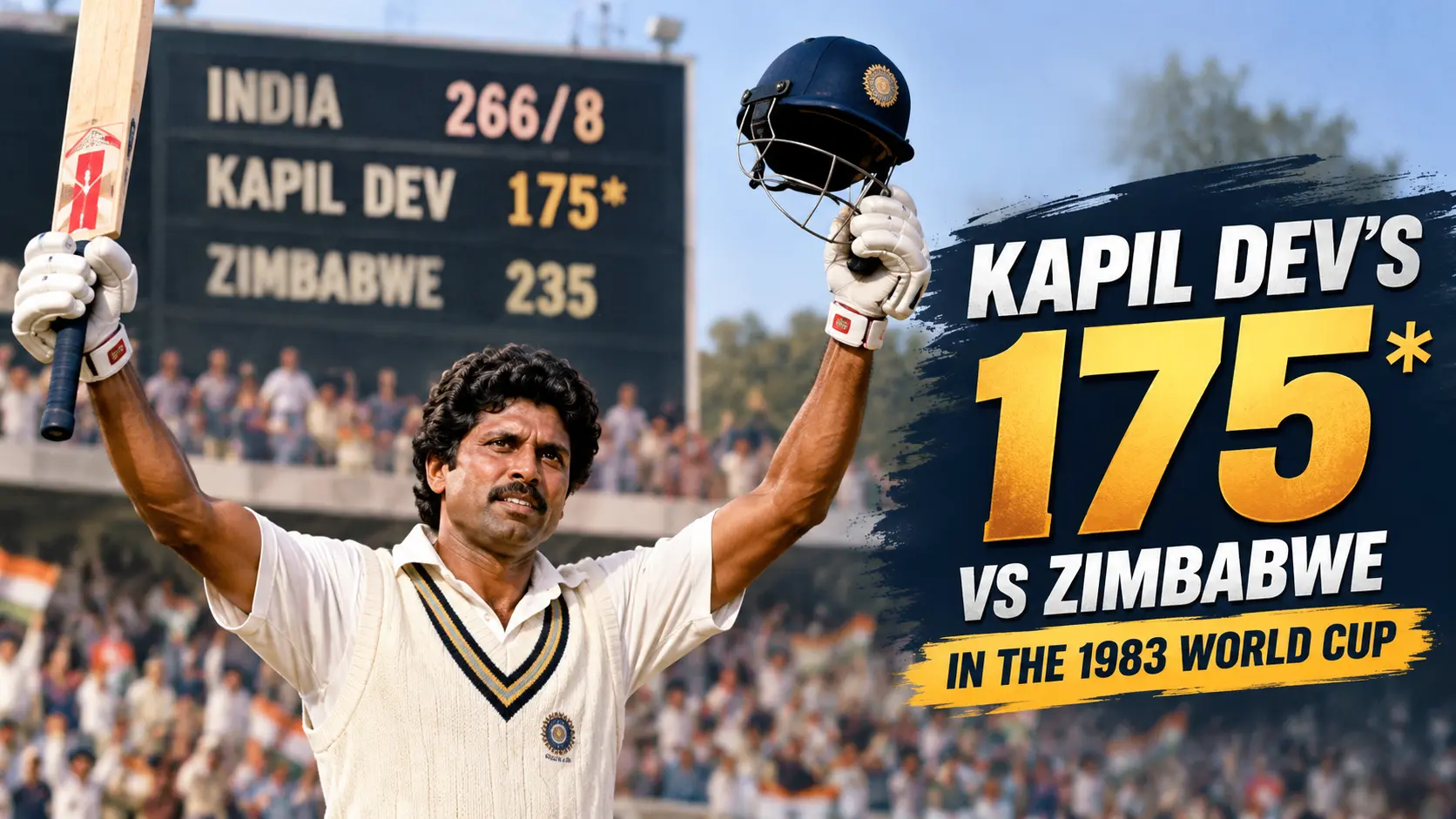
 Kapil Dev’s 175 not out against Zimbabwe remains one of cricket’s greatest rescue innings. India were close to defeat after losing five wickets for only 17 runs. The captain then produced a remarkable performance at Tunbridge Wells. His innings helped India reach 266/8 and win by 31 runs.
The match took place during the 1983 Cricket World Cup in England. It became a turning point in India’s campaign and a defining moment in Kapil Dev’s career. This article explains the match, scorecard, key partnerships and why the innings still matters. The ICC’s history of the 1983 campaign also highlights the innings as a major turning point.
India vs Zimbabwe 1983 World Cup Match: Overview
India faced Zimbabwe on 18 June 1983 at the Nevill Ground in Tunbridge Wells. It was the 20th match of the tournament and part of Group B. India won the toss and chose to bat first. The team needed a strong result after losing its previous two matches.
Zimbabwe’s fast bowlers made an immediate impact. Peter Rawson and Kevin Curran found movement and troubled the Indian top order. India lost four wickets for just nine runs. Kapil Dev arrived at No. 6 and soon watched Yashpal Sharma fall, leaving India at 17/5.
Kapil Dev’s 175 Not Out: The Scorecard
Kapil stayed until the end of the 60-over innings. He scored 175 from 138 balls, with 16 fours and six sixes. His strike rate was 126.81, an outstanding scoring rate for a 60-over ODI in 1983. These figures are confirmed by the Cricinfo historical scorecard.
| Batter | Runs | Balls | 4s | 6s |
|---|---|---|---|---|
| Sunil Gavaskar | 0 | 2 | 0 | 0 |
| Kris Srikkanth | 0 | 13 | 0 | 0 |
| Mohinder Amarnath | 5 | 20 | 1 | 0 |
| Sandeep Patil | 1 | 10 | 0 | 0 |
| Yashpal Sharma | 9 | 28 | 1 | 0 |
| Kapil Dev | 175* | 138 | 16 | 6 |
| Roger Binny | 22 | 48 | 2 | 0 |
| Ravi Shastri | 1 | 6 | 0 | 0 |
| Madan Lal | 17 | 39 | 1 | 0 |
| Syed Kirmani | 24* | 56 | 2 | 0 |
| Extras | 12 | – | – | – |
| Total | 266/8 in 60 overs | |||
The scorecard shows how much responsibility Kapil carried. No other Indian batter reached 25 runs. Kirmani supported him with an unbeaten 24 from 56 balls. Roger Binny made 22, while Madan Lal added 17.
How India Slipped to 17/5
India’s collapse began almost immediately. Sunil Gavaskar was dismissed for zero, and Kris Srikkanth also failed to score. Mohinder Amarnath and Sandeep Patil then departed, leaving India at 9/4.
Kapil entered at that difficult moment. Yashpal Sharma was dismissed soon after, and the scoreboard moved to 17/5. Five recognised batters were gone before India had built a meaningful partnership. Zimbabwe had every reason to believe it could secure an important victory.
| Wicket | Score | Batter dismissed |
|---|---|---|
| 1 | 0 | Sunil Gavaskar |
| 2 | 6 | Kris Srikkanth |
| 3 | 6 | Mohinder Amarnath |
| 4 | 9 | Sandeep Patil |
| 5 | 17 | Yashpal Sharma |
India’s Early Wicket Collapse
India’s first five wickets
Team total when each of the first five wickets fell
Scale: 0–27 runs. This chart highlights the pressure India faced early in the innings.
How Kapil Dev Changed the Match
Kapil did not try to solve the crisis with reckless hitting from the first ball. He first gave himself time to understand the pitch and the bowling. He kept the scoreboard moving while protecting his wicket. Once settled, he began to attack with greater freedom.
His shots went through the covers and straight down the ground. He also used the leg side to find boundaries and clear the rope. The innings combined patience with powerful stroke play. That balance helped him remain at the crease while India rebuilt its total.
Partnerships That Rebuilt India’s Innings
Kapil found support from the lower order as the innings developed. Roger Binny helped add 60 runs for the sixth wicket, while Madan Lal contributed to a 62-run eighth-wicket partnership. Syed Kirmani then stayed with Kapil for the final, unbeaten stand.
| Partner | Wicket | Partnership runs | Why it mattered |
|---|---|---|---|
| Roger Binny | Sixth | 60 | Stopped the early collapse |
| Madan Lal | Seventh | 62 | Helped build a defendable total |
| Syed Kirmani | Ninth | 126* | Added an unbroken stand and took India to 266/8 |
Partnerships That Rebuilt the Innings
Three key partnerships
Runs added during India’s recovery after the early collapse
The 126-run ninth-wicket stand was unbeaten. Values show partnership runs, not individual scores.
The ninth-wicket stand with Kirmani was especially important. Kirmani scored 24 not out, while Kapil made most of the 126 runs. They remained together until the end of the innings. Their partnership turned a likely collapse into a competitive total.
India vs Zimbabwe 1983: How the Match Finished
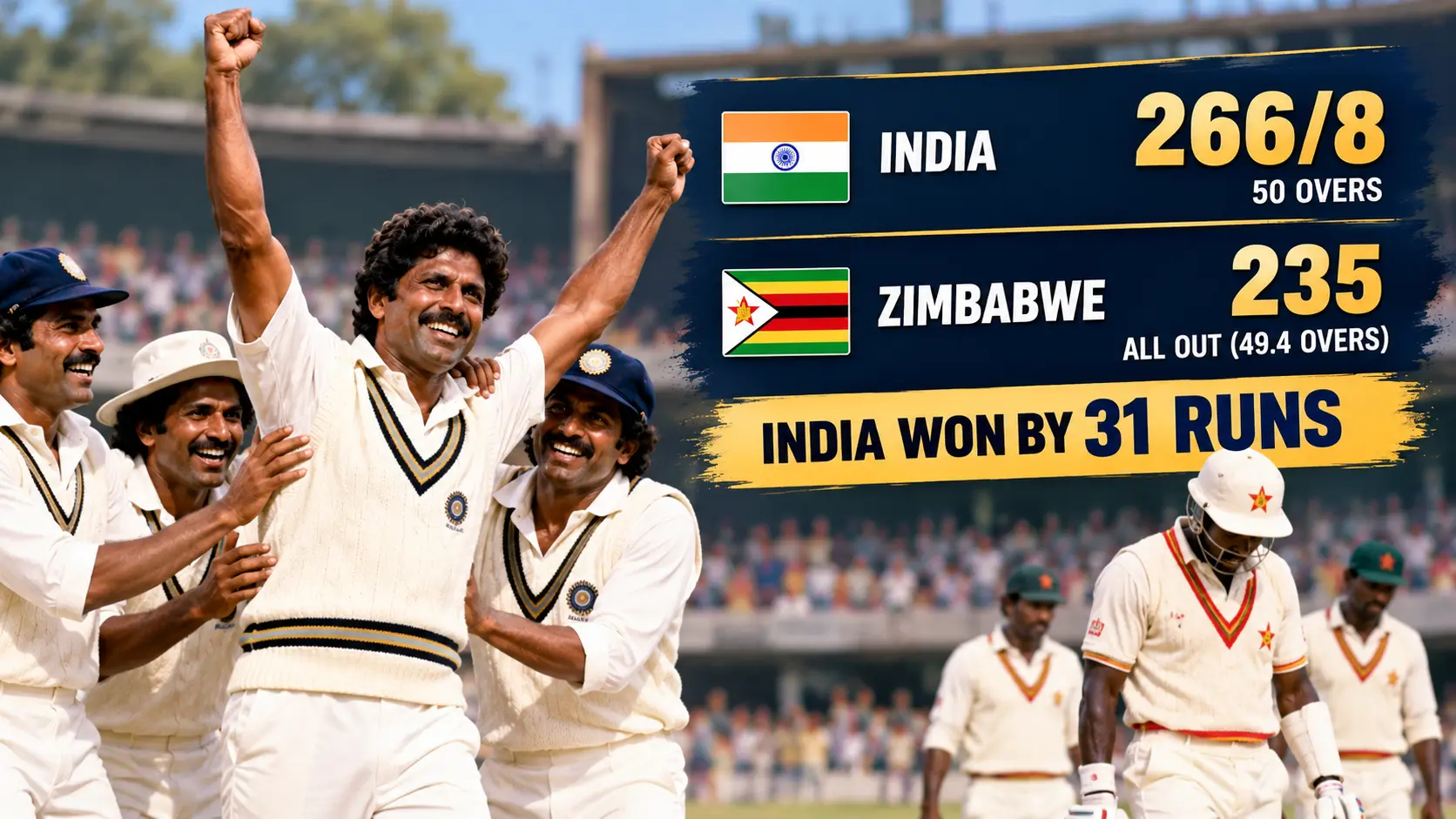
Final Scores: India vs Zimbabwe
Runs scored by each team in the 1983 World Cup match
India’s innings: 266/8 in 60 overs · Zimbabwe’s innings: 235 all out in 57 overs.
India finished on 266/8 from its 60 overs. Zimbabwe needed 267 runs to win. The target was challenging, but the match was still open because Zimbabwe had shown good bowling in the first innings.
Kevin Curran led Zimbabwe’s chase with 73 from 93 balls. Robin Brown scored 35, and Grant Paterson added 23. However, India kept taking wickets and did not allow Zimbabwe to complete the chase.
| Team | Score | Overs |
|---|---|---|
| India | 266/8 | 60 |
| Zimbabwe | 235 all out | 57 |
| Result | India won by 31 runs | |
Madan Lal took three wickets for 42 runs. Roger Binny claimed two, while Kapil took one wicket for 32 runs in 11 overs. India’s bowling effort completed the comeback and kept the team’s World Cup hopes alive.
Why Was Kapil Dev’s 175 Not Televised?
One unusual part of this story is that the match was not broadcast live. The BBC was the tournament’s main broadcaster in the United Kingdom, and industrial action affected its coverage. As a result, most cricket fans could not watch Kapil’s innings on television.
The lack of a full broadcast made the innings unusual in cricket history. Its details survived through the official scorecard, reports and memories of players and spectators. In a BCCI feature recalling the innings, Sunil Gavaskar and Ravi Shastri described its impact on the team.
Kapil himself has spoken about the absence of footage. He has said that the innings remains in his memory, even though viewers cannot revisit a complete television recording. This is one reason the 175 is often described as a great innings that many fans never saw.
Records and Historical Importance of the 175
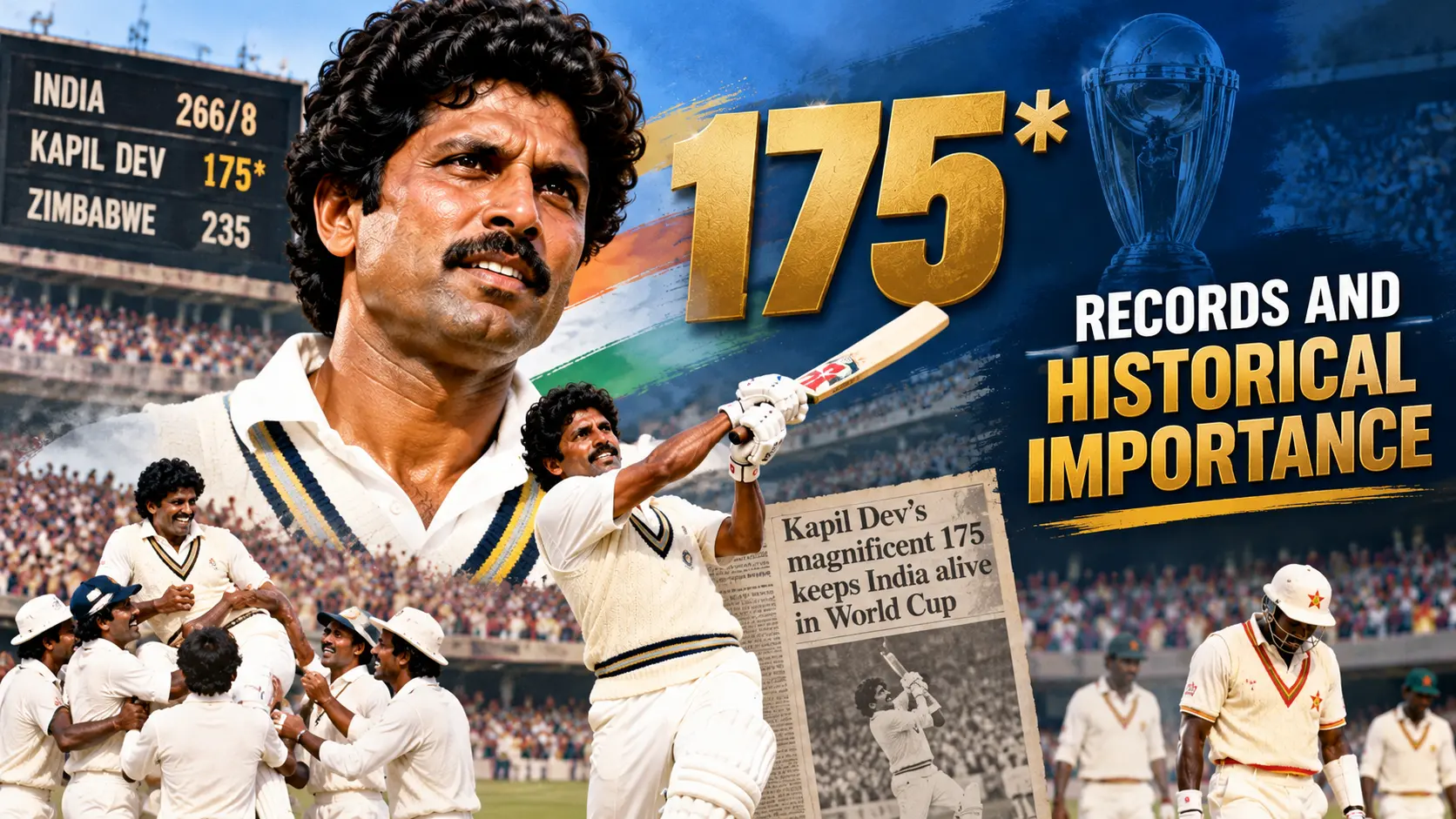
Kapil’s 175 not out was the highest individual score in ODI cricket at that time. It was also the highest score in the 1983 World Cup. His innings was his first ODI century and came when India badly needed a result. The ICC’s tournament retrospective records the innings as a then-world-record score.
The 126-run partnership with Syed Kirmani set a new ODI record for the ninth wicket at the time. This remarkable stand remained unbeaten for many years before another pair eventually surpassed it. Kapil Dev’s innings was therefore important not only as a personal achievement but also as a major contribution to India’s 1983 World Cup campaign. It remains one of the most memorable performances in the history of India vs Zimbabwe ODI Head-to-Head Records.
How the Innings Helped India’s 1983 World Cup Journey
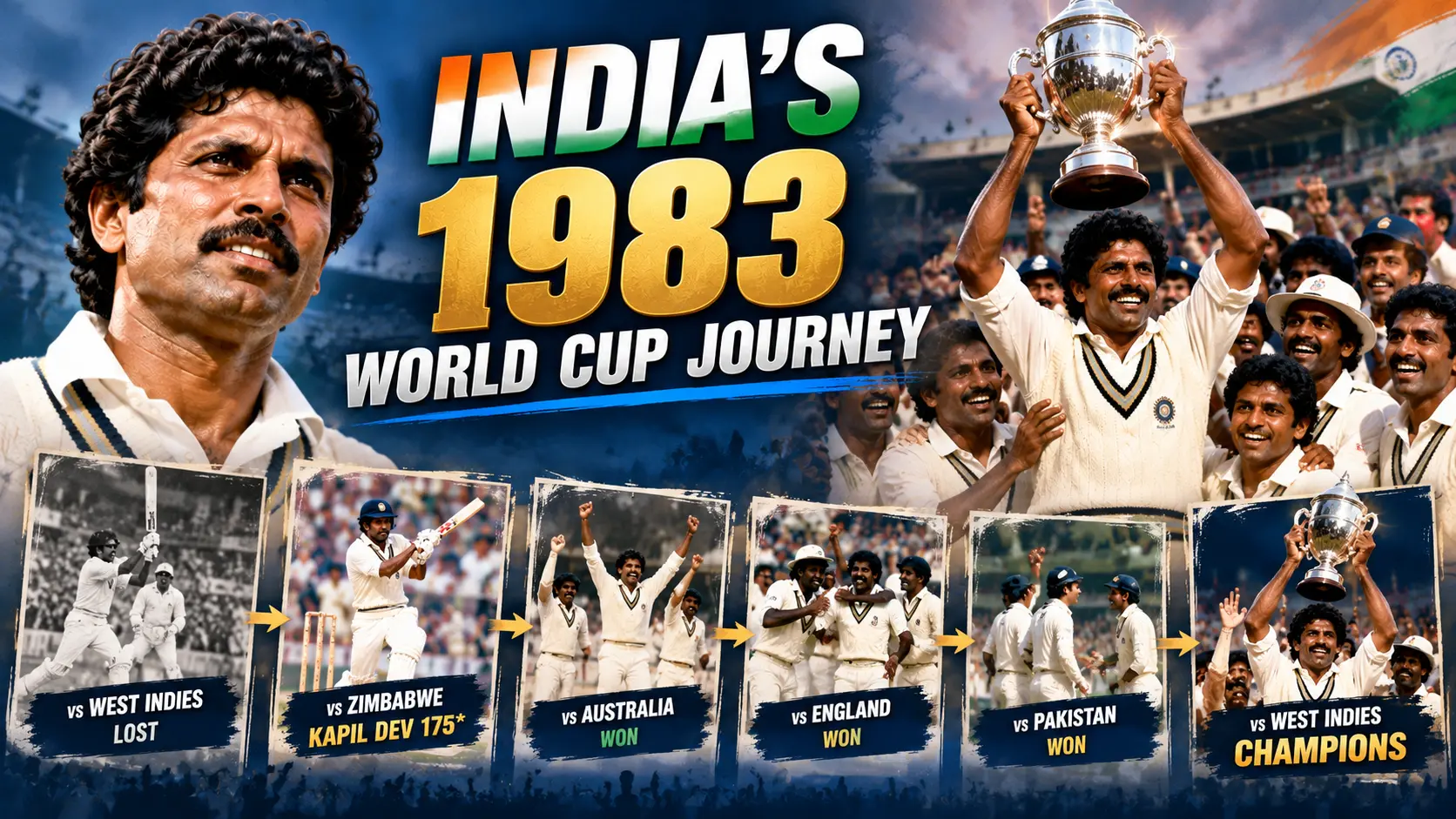
The victory over Zimbabwe stopped India’s losing run and restored belief. It was a crucial result in a group where every match mattered. India later beat Australia to secure a place in the semi-finals.
India then defeated England in the semi-final at Old Trafford. The team reached the final at Lord’s and faced the two-time defending champions, West Indies. India won that final by 43 runs and lifted its first men’s Cricket World Cup.
Kapil’s 175 did not win the tournament by itself, but it helped India stay alive. It gave the team a result when defeat could have ended its campaign. The innings became one of the key moments in the story of the 1983 title.
Frequently Asked Questions
How many runs did Kapil Dev score against Zimbabwe in 1983?
Kapil Dev scored 175 not out from 138 balls against Zimbabwe on 18 June 1983. His innings included 16 fours and six sixes.
What was India’s score when Kapil Dev came to bat?
Kapil came to the crease when India were 9/4. Yashpal Sharma was dismissed soon after, taking the score to 17/5.
What was the result of India vs Zimbabwe in the 1983 World Cup?
India scored 266/8 in 60 overs and bowled Zimbabwe out for 235 in 57 overs. India won the match by 31 runs.
Who shared the 126-run partnership with Kapil Dev?
Syed Kirmani was Kapil Dev’s partner in the unbeaten 126-run stand for the ninth wicket. Kirmani scored 24 not out from 56 balls.
Why was Kapil Dev’s 175 not shown live on television?
The match was not televised because BBC industrial action disrupted its coverage of the 1983 World Cup. The innings is remembered through scorecards, reports and eyewitness accounts.
Was the India vs Zimbabwe match a quarter-final?
No. It was a Group B group-stage match, listed as the 20th match of the 1983 World Cup.
Conclusion
Kapil Dev’s 175 not out against Zimbabwe was more than a big score. It was an innings built under pressure, after India had lost five wickets for only 17 runs. His partnership with Syed Kirmani helped India reach 266/8 and set up a 31-run victory.
The innings remains special because it changed the direction of India’s 1983 World Cup campaign. It also set major ODI records and inspired teammates who later remembered it as a turning point. Even without a full television recording, Kapil’s 175 remains one of the most important innings in Indian cricket history.
Pingback: Kuldeep Yadav's NZ Setback: Stats & India Selection Debate