

T20 cricket is often described as a game of power, big hits and exciting finishes. Yet the action that fans see on the field is only one part of the challenge. Behind every shot, delivery and fielding move is a decision that must be made under pressure.
In a format with just 20 overs per side, players have limited time to recover from a poor moment. A batter cannot always spend several overs getting settled. A bowler may have only a few deliveries to change the direction of an innings. A captain must keep adjusting plans as the score, pitch and match situation change.
This is why T20 cricket can be mentally exhausting. The format demands repeated bursts of concentration, fast reactions and emotional control. Former international players Ambati Rayudu and Aaron Finch have discussed these challenges, including the anxiety created by small mistakes and the need to remain calm. Their observations show that modern T20 cricket requires far more than hitting the ball hard.
1. Why Every Delivery Matters in T20 Cricket
In longer formats, players may have more time to recover after a mistake. A Test batter can rebuild an innings over several sessions, while an ODI batter can sometimes use a few overs to settle. T20 cricket offers much less room for that kind of recovery.
Every delivery has a clear purpose. The batter may be looking for a boundary, a quick single or a way to avoid losing a wicket. The bowler may be trying to stop a boundary, force a mistake or protect a specific area of the ground. The captain and fielders are also watching for clues that could shape the next ball.
A dot ball can increase pressure on a batter who needs to score quickly. A boundary can change the bowler’s plan. A wicket can shift the momentum of the innings, while a dropped catch can give the batting side a second chance. These moments happen close together, so players must reset their minds quickly.
The challenge is not simply to make one good decision. It is to keep making good decisions while the match keeps changing. That constant demand for attention is one of the biggest mental tests in T20 cricket.
How One Delivery Can Change the Pressure
The impact of a ball depends on the match situation. These examples show why players must assess each delivery and quickly prepare for the next one.
| Delivery or event | Effect on the match | Mental challenge |
|---|---|---|
| Dot ball | Can increase the required scoring rate during a chase | The batter must avoid rushing the next shot |
| Boundary | Can shift momentum and force a bowling change of plan | The bowler needs to reset rather than react emotionally |
| Wicket | Can change the innings and bring a new batter to the crease | Both teams must adjust quickly to the new situation |
| Dropped catch | Gives the batting side another opportunity | Fielders need to move on and stay alert for the next ball |
| Final-over delivery | May have a major effect on the final total or chase | Bowler and batter must stick to a clear plan under pressure |
2. The Mental Pressure on T20 Batters

T20 batters are expected to score quickly, but attacking every ball is not a reliable plan. They must judge the bowler, read the field, assess the pitch and choose a shot in a very short time. They also need to understand the match situation before taking a risk.
For example, a batter might face a spinner with a long boundary on one side and a short boundary on the other. The right choice could be to use the gap for a single instead of attempting a risky six. On another delivery, the field may be spread out, making a boundary attempt more attractive.
Batters must also handle the fear of failure. A player who gets out after facing only a few balls may feel that they have let the team down. But trying too hard to avoid failure can create even more pressure. It may lead to rushed footwork, poor shot selection or hesitation at the crease.
The middle order faces a special challenge
Middle-order batters often do not know when they will be required. They may enter during the powerplay after an early wicket, arrive in the middle overs to rebuild, or come in at the end to chase a difficult target. Their role can change within minutes.
They may also spend much of the innings waiting in the dugout while mentally preparing for several possible situations. They need to watch the game, understand the bowlers’ plans and be ready to score quickly without having the luxury of a long settling period.
This is one reason why practice matters so much. Players work on timing, power-hitting, strike rotation and different match scenarios so that they can trust their skills when they finally walk out to bat.
3. Why T20 Bowlers Must Think Quickly
T20 Bowling: Where Pressure Builds
Common pressure points for bowlers during a T20 innings
Illustrative visual only. Bar lengths explain typical T20 demands; they are not measured or ranked player data.
Modern T20 bowlers cannot rely on pace or spin alone. They need a clear plan for each batter and must adjust that plan when the batter starts reading them. A bowler may use a slower ball, a yorker, a wide line or a short delivery, depending on the batter’s strengths and the field setting.
But a plan only works when it is executed well. A yorker that misses its length can become a full toss. A slower ball that sits up may be hit over the boundary. A short ball that is too predictable can help the batter prepare early.
The pressure becomes greater near the end of an innings. In the final overs, bowlers often know that one poor delivery can cost six runs or more. They must control their emotions, remember their plan and make small adjustments without becoming distracted by the last ball.
Good T20 bowling is therefore a mental contest as well as a technical one. The bowler tries to predict the batter’s next move, while the batter tries to predict the bowler’s plan. The player who reads the situation more clearly can gain a valuable advantage.
4. Captains Must Make Decisions in Real Time
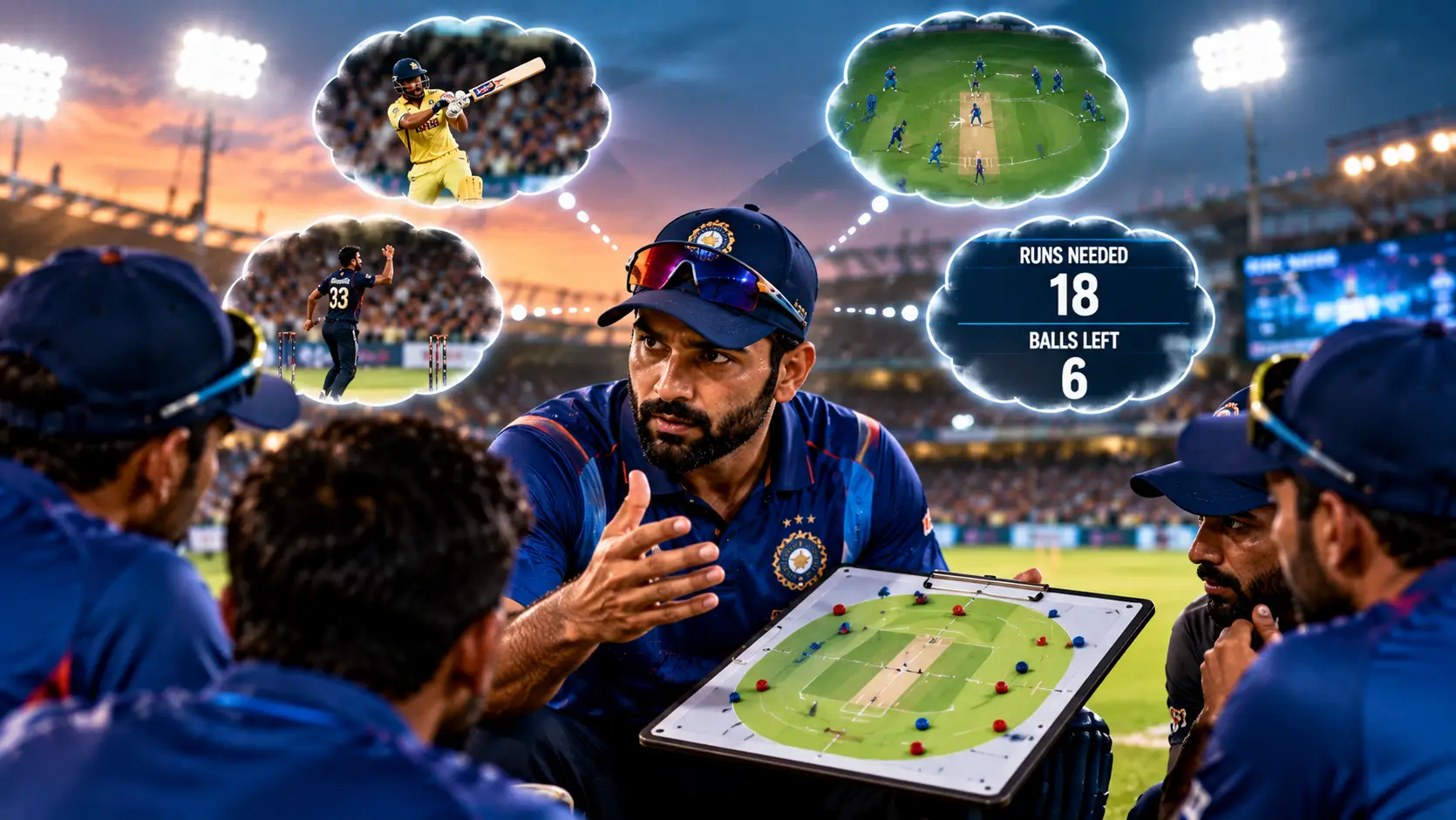
T20 captains are constantly balancing risk and reward. They must decide when to use their best bowlers, when to bring on spin, where to place fielders and how to respond when a batter targets a particular area.
There is rarely one perfect plan for an entire innings. A captain may begin with an attacking field, then move a fielder after a boundary. A bowler may ask for a different field because the pitch is gripping. A new batter may force the captain to rethink the match-up.
These decisions must be made quickly, often with incomplete information. Captains also have to communicate clearly so that bowlers and fielders understand the plan. If a team becomes confused or reacts emotionally, it can lose control of the game.
Leadership in T20 cricket means staying calm while accepting that not every decision will work. T20 Cricket Training Tips often focus on building mental strength, making quick decisions, and staying composed under pressure. A sensible plan can still fail because of a perfect shot or a slight error in execution. The captain’s job is to learn from the result and make the next decision with a clear mind.
Quick Comparison: Mental Challenges by Player Role
Every role in T20 cricket comes with a different kind of pressure. This comparison shows what players must manage while the match is moving quickly.
| Player role | Main pressure | What helps |
|---|---|---|
| Batter | Scoring quickly while protecting their wicket | Read the field, choose the right risk and trust the plan |
| Bowler | Executing a precise delivery when one mistake can cost runs | Commit to a clear plan and reset after each ball |
| Captain | Changing fields and tactics as the match shifts | Communicate clearly and make decisions based on the situation |
| Fielder | Staying alert even during quiet periods | Maintain focus, anticipate the next play and support teammates |
5. Momentum Swings Make the Game Emotionally Intense

Momentum is a powerful part of T20 cricket. A pair of boundaries can lift the batting side and put the bowler under pressure. A wicket immediately afterwards can change the mood again. Because the format moves quickly, players have little time to enjoy a good moment or dwell on a bad one.
This emotional movement can be difficult to manage. After conceding a six, a bowler might try too hard to produce a special delivery. After losing a wicket, a batter might feel forced to attack the next ball. Both reactions can make the situation worse.
Successful players learn to treat each delivery as a fresh task. They review what happened, identify what they can control and return their attention to the next ball. This does not mean ignoring mistakes. It means learning from them without allowing them to dominate the next decision.
6. Physical Intensity Adds to Mental Fatigue
Physical Effort and Focus in T20 Cricket
Key demands players may need to manage during a match
Illustrative visual only. These are not scientific measurements, player performance scores or research findings.
The mental demands of T20 cricket do not happen separately from the physical demands. Players sprint between the wickets, chase balls, dive in the field and make explosive movements. In hot conditions, the strain can become even greater.
Batters must combine quick running with repeated high-intensity shots. Bowlers have to deliver with control while managing their run-up, balance and follow-through. Fielders need to stay alert even when they have not been involved in the action for several overs.
Physical fatigue can make concentration harder to maintain. When a player is tired, it may become more difficult to process information, stay patient or execute a familiar skill. Research on cricket and other sports has examined how mental fatigue can affect performance-related tasks, although the findings from small or specific studies should not be treated as proof that every player responds in the same way.
Recovery, hydration, fitness and good preparation all matter. So does learning how to use the short breaks between overs to breathe, reset and prepare for the next phase of the match.
7. Why Calm Breathing and Mental Resets Matter
When pressure rises, players may feel their heart beating faster and their thoughts racing. They might begin to focus on the possible consequences of failure instead of the task in front of them. A simple routine can help bring attention back to the present.
Controlled, steady breathing is one tool players can practise. It will not remove pressure or guarantee success, but it can help a player pause and regain focus. A batter might take a breath before facing the next delivery. A bowler might use the walk back to the mark to settle down and visualise the plan.
Pre-ball routines can also create consistency. Checking the field, choosing a target and committing to a shot or delivery gives the mind a clear sequence to follow. The routine should be short enough to use in a fast-moving match and flexible enough to change with the situation.
The goal is not to feel no pressure. Elite sport always includes uncertainty. The goal is to keep pressure from controlling the next decision.
8. How T20 Training Has Become More Specialised
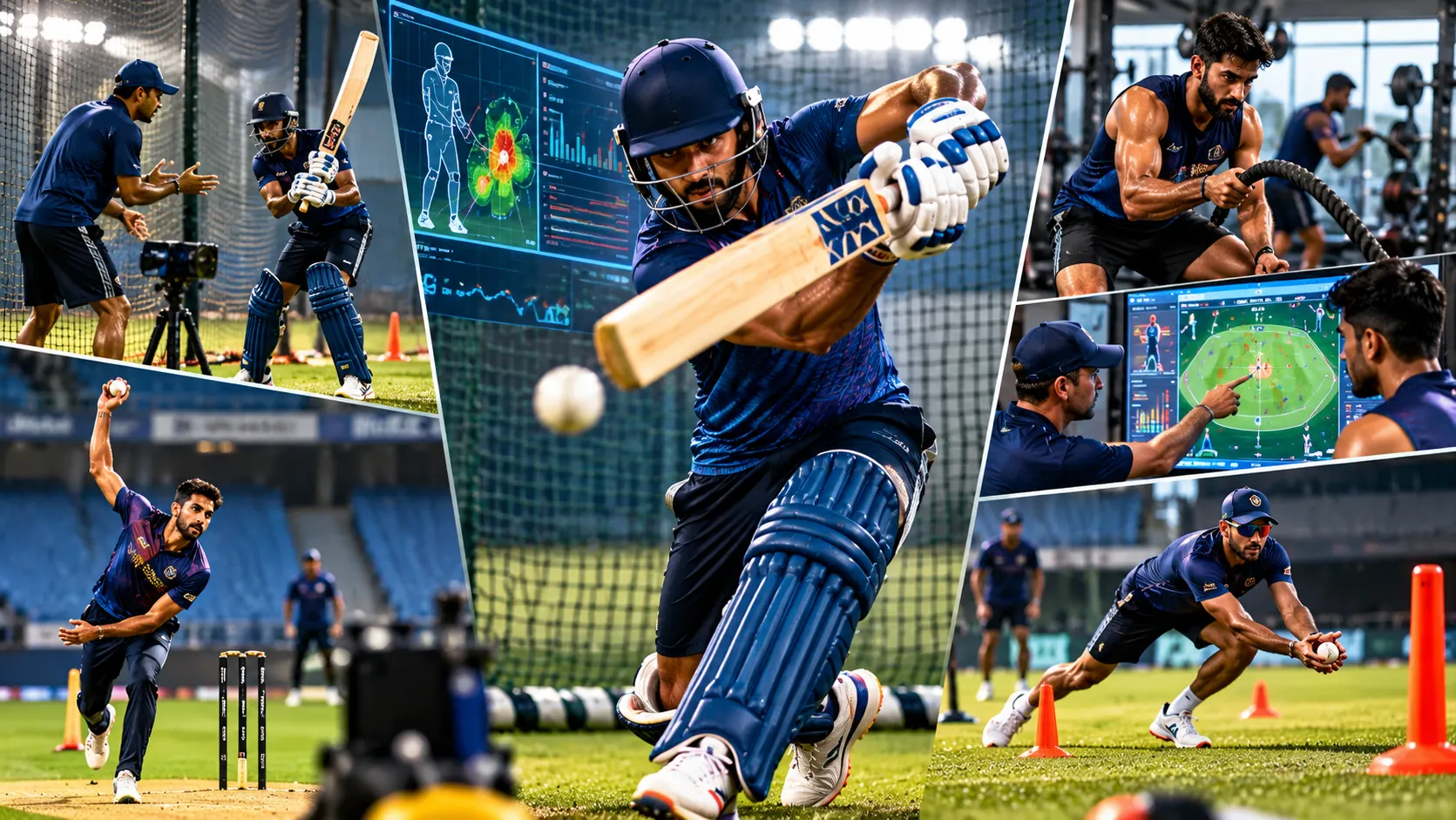
As T20 cricket has developed, preparation has become more specific. Players train for different roles, ground dimensions, pitch conditions and match situations. Batters may practise hitting particular lengths into selected areas, while bowlers rehearse yorkers, slower balls and plans for different types of hitters.
Scenario-based training is especially useful. A batter might practise entering with only a few overs remaining, or chasing a required run rate that keeps rising. A bowler might work on defending a small total or bowling at the death with field restrictions in mind. These sessions help players experience mentally pressure before they face it in a real match.
Training in an open ground can also give batters a better sense of distance and angles than hitting only into enclosed nets. It allows them to see whether a shot clears the boundary, reaches a gap or travels towards a fielder. That information can help them make more realistic choices during a game.
Preparation is not only about doing more work. It is about practising the right skills, understanding one’s role and building confidence in a plan. Players who know their options can spend less time second-guessing themselves when the pressure is high.
9. T20, ODI and Test Cricket: Different Kinds of Pressure
It is difficult to say that one format is always the hardest. Test cricket demands patience, concentration over long periods and the ability to handle changing conditions across several days. One-Day Internationals require players to balance risk and control over 50 overs. T20 cricket compresses many decisions into a shorter, more intense period.
| Format | Main mental demand | Common challenge |
|---|---|---|
| T20 cricket | Fast decisions and quick emotional resets | Limited time to recover from mistakes |
| ODI cricket | Managing phases and changing run-rate demands | Balancing wickets with scoring across 50 overs |
| Test cricket | Long-term concentration and patience | Maintaining discipline over extended periods |
The formats test different skills, and players may find one more demanding than another. T20 is distinctive because the need for immediate impact is constant. The best approach is to recognise the demands of each format rather than assume that shorter automatically means easier.
10. How Players Can Handle T20 Pressure Better
Mental strength is not simply a personality trait that some players have and others lack. It can be developed through preparation, reflection and repeated practice under realistic conditions. Players and coaches can use several practical methods to improve performance under pressure.
- Focus on the next ball: Avoid replaying the previous mistake while preparing for the next delivery.
- Know the role: Understand whether the situation calls for building an innings, rotating strike or attacking a particular bowler.
- Practise match scenarios: Rehearse different targets, field settings and late-innings situations before competition.
- Use a repeatable routine: Build a short process for breathing, checking the plan and committing to the next action.
- Accept that failure is part of the game: Even a good decision can produce a poor result. Review the choice and execution separately.
- Communicate clearly: Batters, bowlers and captains should share information without adding unnecessary panic.
- Protect recovery time: Sleep, hydration, fitness and rest support both physical performance and concentration.
These methods cannot guarantee a win. Cricket is unpredictable, and opponents are trying to disrupt every plan. However, strong routines can help players make clearer decisions and respond more constructively when the match becomes difficult.
Simple Ways to Manage Pressure During a Match
| Method | How to use it | Why it may help |
|---|---|---|
| Focus on the next ball | Let the previous delivery go and identify the next task | Reduces distraction from a recent mistake |
| Steady breathing | Take a controlled breath before returning to the crease or bowling mark | Creates a brief pause to regain focus |
| Match-scenario practice | Rehearse run chases, death overs and changing field settings | Makes high-pressure situations more familiar |
| Clear communication | Share plans and adjustments in short, direct language | Helps teammates understand their roles |
| Recovery habits | Prioritise sleep, hydration, fitness and rest | Supports readiness and concentration |
11. Why Fans Should Look Beyond Sixes and Wickets

Fans often judge a T20 performance by visible outcomes: the number of sixes, the speed of a half-century or the wickets taken in the final overs. Those numbers matter, but they do not show every decision a player makes.
A batter who takes a single to give a stronger hitter the strike may be making a smart team decision. A bowler who concedes a single instead of a boundary may have executed the plan well. A captain who changes the field before a batter targets a gap may prevent a scoring opportunity that never appears in the scorecard.
Understanding these details makes T20 cricket even more interesting. The game is not just a contest of power. It is also a contest of information, timing, anticipation and emotional control. Every delivery asks players to solve a small problem while the bigger match situation continues to evolve.
Conclusion: T20 Cricket Is Short, but Never Simple
T20 cricket may be the shortest major format, but its demands are intense. Batters must score quickly without taking careless risks. Bowlers need to execute precise plans under pressure. Captains must adjust fields and tactics while the game changes from ball to ball. All players must manage momentum, physical effort and the fear of making mistakes.
The format’s real difficulty lies in the need to stay switched on. A single delivery can change a player’s plan, shift the momentum or decide a close finish. That is why preparation, calm breathing, clear communication and quick mental resets are so important.
For viewers, this is part of what makes T20 cricket compelling. Behind every big hit or crucial wicket is a series of decisions made in a fraction of the time available in longer formats. The game is fast, but the thinking behind it is complex. T20 is not simply about playing harder; it is about thinking clearly when there is almost no time to pause.
Frequently Asked Questions
Why is T20 cricket mentally exhausting?
T20 cricket demands constant attention because every delivery can affect the score, momentum and match plan. Players must make quick decisions and reset after mistakes with little time to recover.
Is T20 cricket harder than Test cricket?
Neither format is automatically harder. T20 places greater emphasis on fast decisions and short bursts of intensity, while Test cricket demands patience and concentration over long periods.
Why do middle-order batters need special preparation?
Middle-order batters may enter at different stages and face very different situations. They often need to score quickly without the time to settle, so they practise a range of match scenarios.
How can players stay calm in a T20 match?
Players can use steady breathing, short routines, clear plans and scenario-based practice. These habits can help them focus on the next action rather than worry about the previous mistake.
Does mental fatigue affect cricket performance?
Mental fatigue may affect concentration and some performance-related tasks. Its effects vary by player and situation, so research findings should be interpreted carefully rather than treated as a guarantee of a particular result.