
DC vs CSK 2026 results: Chennai Super Kings defeated Delhi Capitals in both IPL 2026 league encounters. CSK won by 23 runs at MA Chidambaram Stadium on 11 April, then chased down 156 in 17.3 overs to win by eight wickets at Arun Jaitley Stadium on 5 May. Sanju Samson was the decisive batter in both matches, delivering an unbeaten 115 and an unbeaten 87.
DC vs CSK 2026 Results: Both IPL Matches at a Glance
| Match | Date and venue | CSK innings | DC innings | Winner |
|---|---|---|---|---|
| Match 18 | 11 April, Chennai | 212/2 (20 overs) | 189 all out (20 overs) | CSK by 23 runs |
| Match 48 | 5 May, Delhi | 159/2 (17.3 overs) | 155/7 (20 overs) | CSK by 8 wickets |
DC 189 all out
CSK won by 23 runs
DC 155/7
CSK won by 8 wickets
CSK vs DC, 11 April 2026: Samson’s Century Decides Chennai Clash
Delhi Capitals won the toss and elected to field at MA Chidambaram Stadium. Chennai Super Kings made full use of their first innings, reaching 212/2 from 20 overs. Sanju Samson dominated the scorecard with 115 not out from just 56 deliveries, striking 15 fours and four sixes. His strike rate of 205.36 forced Delhi to defend almost every part of the ground.
Ruturaj Gaikwad contributed 15 from 18 balls before falling to Axar Patel. Ayush Mhatre then produced an important 59 from 36 balls and was retired out. Shivam Dube remained unbeaten on 20 from 10 deliveries. The individual contributions mattered because Samson was not left to carry the entire scoring burden: Mhatre kept the innings moving through the middle overs, while Dube provided late momentum.
Chennai Super Kings batting: Match 18
| Batter | Runs | Balls | Fours | Sixes |
|---|---|---|---|---|
| Sanju Samson* | 115 | 56 | 15 | 4 |
| Ayush Mhatre (retired out) | 59 | 36 | 3 | 4 |
| Shivam Dube* | 20 | 10 | 2 | 1 |
| Ruturaj Gaikwad | 15 | 18 | 1 | 0 |
| Total | 212/2 in 20 overs | |||
CSK scored 61 runs in the powerplay and were 62/1 when Gaikwad was dismissed at 6.2 overs. Samson and Mhatre added 113 runs for the second wicket, which changed the innings from a promising start into a dominant total. Delhi struggled to produce consecutive quiet overs. Axar claimed the only conventional bowler’s wicket in that Chennai innings; the other dismissal was a retirement.
Delhi Capitals’ chase of 213
Delhi replied with 189 all out in their full allocation of 20 overs, losing by 23 runs. Tristan Stubbs top-scored with 60 from 38 balls. Pathum Nissanka offered early intent with 41 from 24, while KL Rahul scored 18 from 10. Ashutosh Sharma added 19 from 10, but bursts of scoring did not develop into a match-winning partnership.
The asking rate began at 10.65 runs per over, which gave the batters little freedom to spend several deliveries settling in. Even after aggressive shots, wickets interrupted Delhi’s momentum. Jamie Overton was particularly influential with the ball, and the Chennai attack did enough collectively to protect its target.
For more IPL rivalry coverage and cricket explainers, readers can explore Betting ID India. The central lesson from Delhi’s innings was the value of protecting wickets: a team that loses five batters before the eleventh over generally has fewer options for acceleration, even if its finishers are capable of hitting boundaries.
DC vs CSK, 5 May 2026: Chennai Complete the Season Double
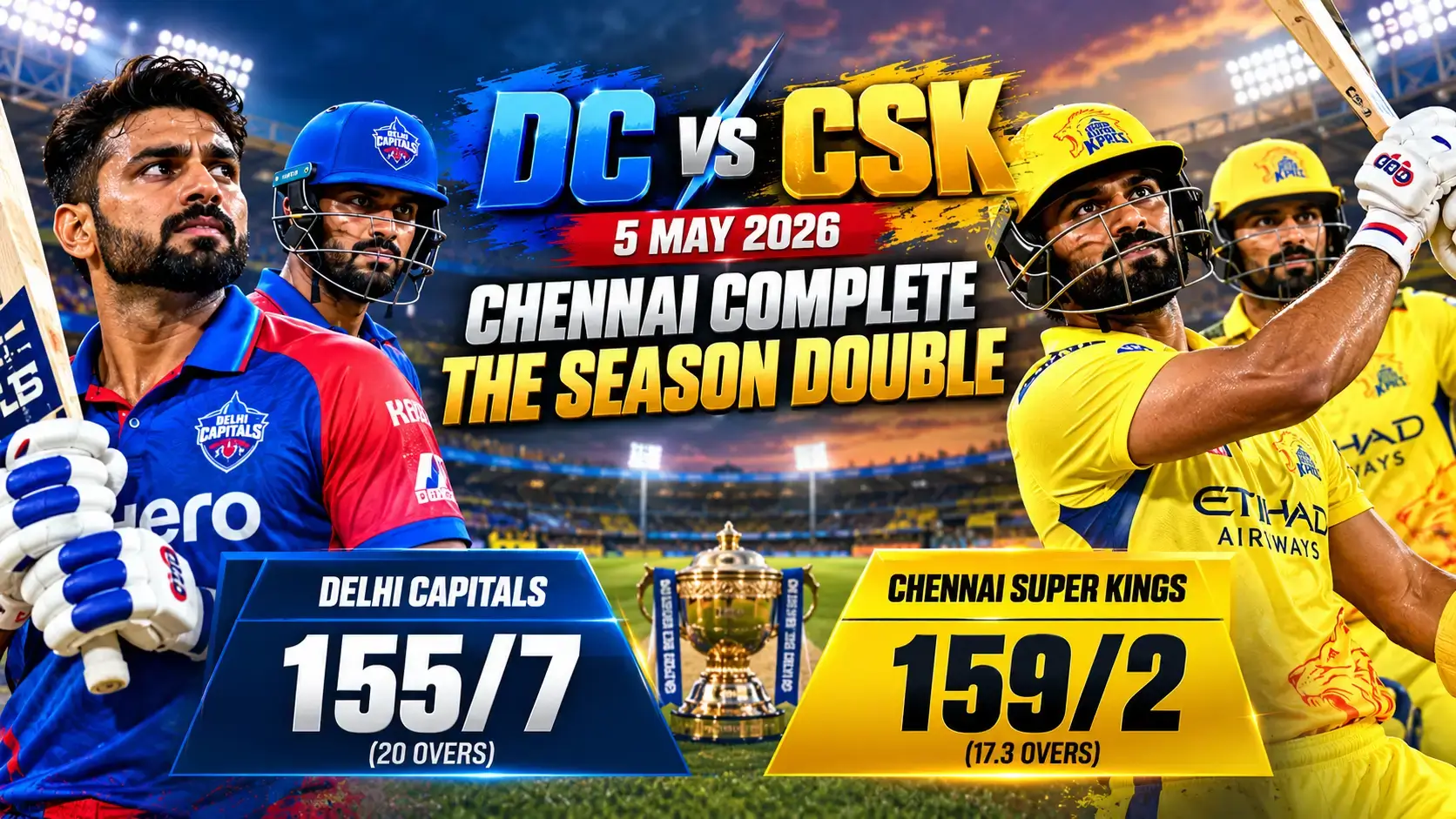
The second meeting moved to Arun Jaitley Stadium, where Delhi won the toss and chose to bat. This time, CSK’s attack took control. Delhi were 37/2 after six overs and then slipped to 69/5 after 10.6 overs. The dismissals of established batters prevented the hosts from building a reliable platform for the final ten overs.
Noor Ahmad took 2/22 in three overs and provided valuable breakthroughs. Akeal Hosein was especially economical, conceding only 19 runs from four overs while taking a wicket. Mukesh Choudhary, Gurjapneet Singh and Jamie Overton also contributed wickets. Together, they restricted Delhi to 155/7, a run rate of 7.75.
Delhi Capitals batting: Match 48
| Batter | Runs | Balls | Strike rate |
|---|---|---|---|
| Sameer Rizvi* | 40 | 24 | 166.67 |
| Tristan Stubbs | 38 | 31 | 122.58 |
| Pathum Nissanka | 19 | 15 | 126.67 |
| Nitish Rana | 15 | 13 | 115.38 |
| Ashutosh Sharma | 14 | 5 | 280.00 |
| Total | 155/7 in 20 overs | ||
Sameer Rizvi’s unbeaten 40 featured four sixes, while Stubbs contributed 38. Their sixth-wicket partnership of 65 from 47 deliveries helped avert a much smaller total. Ashutosh’s brief cameo also supplied useful late runs. Yet the rebuilding work consumed deliveries that might otherwise have been used for sustained attack.
Chennai’s chase: Samson and Kartik Sharma finish the job
Chennai reached 159/2 in 17.3 overs, winning with 15 deliveries unused. Samson again led from the front, compiling 87 not out from 52 balls with seven fours and six sixes. Kartik Sharma contributed an unbeaten 41 from 31 balls, while Urvil Patel added 17 from nine.
CSK were 44/1 at the end of the powerplay and 45/2 at 6.3 overs. Delhi still had an opportunity to create pressure, but Samson and Kartik Sharma established an unbroken 114-run partnership from 66 balls. Their stand removed the uncertainty from the chase and allowed Chennai to win without exposing the remaining middle order.
DC vs CSK 2026 Player Stats and Key Numbers
Individual performances reveal a strong Chennai advantage in match-defining contributions. Samson scored 202 runs across the two meetings without being dismissed. His combined runs came from 108 balls, giving an aggregate scoring rate of approximately 187.04 runs per 100 balls. The figure describes these two innings only, not his overall IPL 2026 season.
| Statistic | 11 April, Chennai | 5 May, Delhi |
|---|---|---|
| Winning side | CSK | CSK |
| Player of the Match | Sanju Samson | Sanju Samson |
| Samson’s contribution | 115* (56) | 87* (52) |
| DC top scorer | Tristan Stubbs, 60 | Sameer Rizvi, 40* |
| CSK powerplay runs | 61 | 44 |
| DC powerplay runs | See full scorecard | 37 |
| DC innings total | 189 | 155/7 |
Across these encounters, Chennai scored 371 runs in two innings, while Delhi scored 344. The 27-run difference is a descriptive aggregate rather than a measure of relative team strength, because Chennai used only 17.3 overs in the second match. CSK lost just four wickets across the two batting innings, compared with 17 for Delhi.
Bowling performances that shaped the second match
| CSK bowler | Overs | Runs | Wickets |
|---|---|---|---|
| Noor Ahmad | 3 | 22 | 2 |
| Akeal Hosein | 4 | 19 | 1 |
| Mukesh Choudhary | 4 | 31 | 1 |
| Gurjapneet Singh | 4 | 29 | 1 |
| Jamie Overton | 1 | 5 | 1 |
Hosein’s four-over spell was exceptionally important because he conceded fewer than five runs per over. His control forced batters to look elsewhere for scoring opportunities. Noor then supplied the wickets that made it harder for Delhi to rebuild naturally. The combination of run suppression and breakthroughs proved more effective than relying on wickets alone.
DC vs CSK 2026 Graphs: Runs and Performance Comparison
These lightweight HTML/CSS charts compare confirmed totals and major batting contributions. The bars are proportional to the stated values and require no external JavaScript library, making them suitable for WordPress Gutenberg Custom HTML blocks.
CSK won by 23 runs. Scale: highest match total = 100%.
Actual scores were CSK 159/2 and DC 155/7; CSK won by eight wickets. The bars compare runs, not winning margin.
Combined: 202 unbeaten runs across the two encounters.
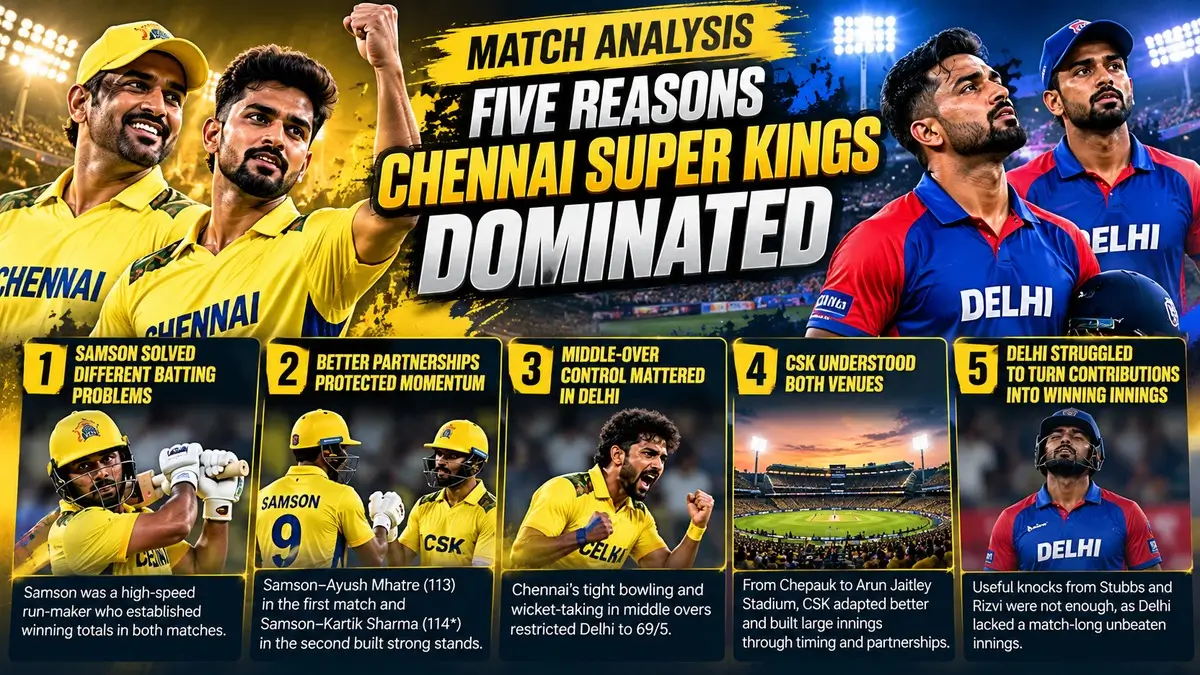
Match Analysis: Five Reasons Chennai Super Kings Dominated
1. Samson solved different batting problems
In Chennai, Samson was a high-speed run-maker who established a winning total. In Delhi, he was the reliable unbeaten batter in a chase. The ability to adjust to conditions and target size was more valuable than merely scoring quickly in both games. His two Player of the Match awards reflected two distinct innings rather than an identical batting template.
2. Better partnerships protected momentum
Samson and Ayush Mhatre put on 113 in the first match, while Samson and Kartik Sharma added an unbeaten 114 in the second. Delhi’s best rebuilding stand in the May game was the 65-run Stubbs–Rizvi partnership. Those differences in sustained batting partnerships had a direct effect on scoring options.
3. Middle-over control mattered in Delhi
Delhi were only 69/5 after 10.6 overs in the second match. Chennai used tight bowling and wicket-taking threats together, reducing the possibility of an unrestricted finish. Even though Delhi managed 86 more runs from their remaining balls, the early damage had already shaped the contest.
4. CSK understood both venues
Chepauk rewarded Chennai’s ability to build a large innings through timing and strong partnerships. At Arun Jaitley Stadium, their bowlers kept Delhi below a score that might have forced riskier chasing tactics. Venue conditions alone cannot explain results, but the scorecards indicate that Chennai adapted better on both occasions.
5. Delhi struggled to turn contributions into winning innings
Tristan Stubbs scored 60 in Chennai and 38 in Delhi; Rizvi’s unbeaten 40 in May was also valuable. Yet Delhi lacked a comparable match-long unbeaten innings to Samson’s. A partnership or individual hundred would not guarantee victory, but the absence of one made both assignments significantly harder.
What Delhi Capitals Can Learn from the 2026 Meetings
Delhi’s first lesson is to balance powerplay aggression with wicket preservation. Boundaries are important, particularly in a chase above 200, but early dismissals reduce flexibility for the remaining overs. A side should identify which batter is best placed to bat deep and ensure others can attack around that player.
Third, the bowling unit needs a more consistent response when an opposing batter dominates. Samson’s 115 in Chennai underlined the cost of allowing a set player to continue scoring rapidly. Changes of length, field placement and match-ups should be applied with a clear plan rather than as isolated reactions.
DC vs CSK Head-to-Head Context: Why 2026 Matters
The Chennai–Delhi fixture has long combined established IPL experience with changing squads, tactics and domestic talent. Recent meetings before 2026 showed that Delhi could beat Chennai, including victories in 2024 and 2025. That context makes Chennai’s two-win return in 2026 a meaningful change in the immediate rivalry, rather than evidence that the fixture has always been one-sided.
For the broader scorecard record and match-by-match context, the official IPL match centre provides the confirmed 5 May result. It is preferable to rely on completed scorecards rather than pre-match previews when reporting historic match totals and awards.
DC vs CSK 2026 Frequently Asked Questions
Who won DC vs CSK in IPL 2026?
Chennai Super Kings won both meetings: by 23 runs on 11 April in Chennai and by eight wickets on 5 May in Delhi.
What was the score of CSK vs DC on 11 April 2026?
CSK scored 212/2 in 20 overs. Delhi Capitals scored 189 all out in 20 overs, so Chennai won by 23 runs.
What was the result of DC vs CSK on 5 May 2026?
Delhi posted 155/7, and Chennai reached 159/2 in 17.3 overs to win by eight wickets.
Who scored the most runs across the two matches?
Sanju Samson scored 202 runs across the two matches, with unbeaten innings of 115 and 87.
Who was Player of the Match in both DC vs CSK fixtures?
Sanju Samson received the award in both games.
Which Delhi Capitals batter performed best in Chennai?
Tristan Stubbs top-scored for Delhi with 60 off 38 balls in the 11 April match.
Why did Delhi lose the second match?
Delhi fell to 69/5 and finished with 155/7. CSK then built an unbeaten 114-run partnership for the third wicket to complete a comfortable chase.
Conclusion: The Defining Story of DC vs CSK 2026
Chennai Super Kings finished their 2026 league head-to-head against Delhi Capitals with a perfect two-from-two record. The opening victory highlighted Sanju Samson’s power-hitting and the value of sustained partnerships; the return fixture displayed Chennai’s bowling control and ability to chase without panic.
Delhi’s batting offered moments of resistance, particularly from Tristan Stubbs and Sameer Rizvi, but too many wickets and insufficiently long partnerships limited their results. For readers following future DC vs CSK contests, the best reference points from 2026 are Samson’s 202 unbeaten runs, Chennai’s economical bowling in Delhi and the importance of building an innings around a batter who can stay until the end.