
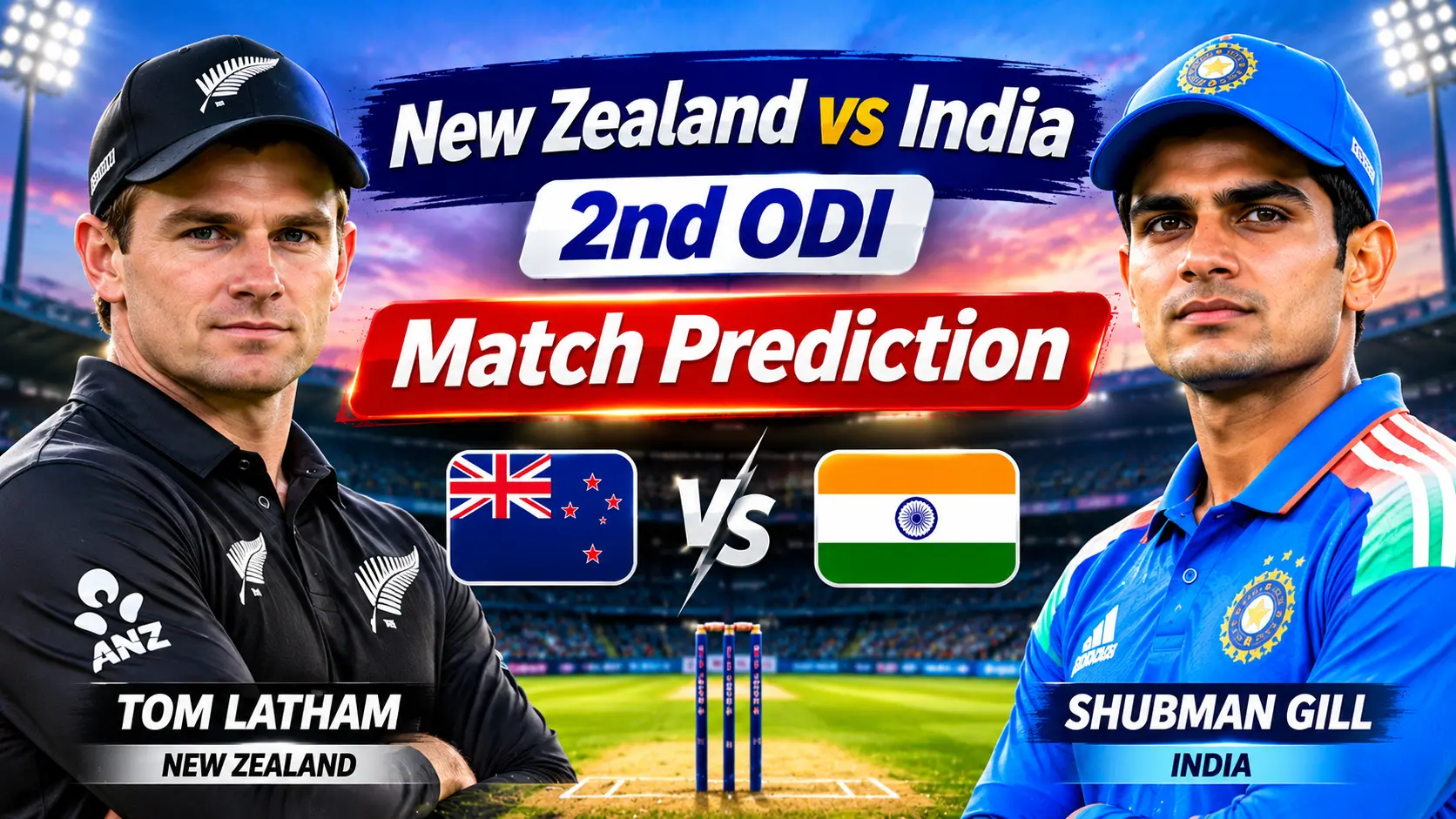
India carry a 1-0 lead into Wellington after winning the opening ODI by five wickets under the DLS method. New Zealand now need a stronger batting effort to level the series. The second match should bring a close contest, but India’s experienced batting order and disciplined bowling give the visitors a clear edge.
Who will win the New Zealand vs India 2nd ODI?
India have the stronger position after winning the opener and restricting New Zealand to 185. Virat Kohli’s 74 from 51 balls showed how quickly India can control a chase when a set batter stays at the crease.
Our prediction is that India are more likely to win the second ODI. Their batting depth gives them several ways to build or chase a total. The visitors also have a 1-0 series lead, which allows them to play with confidence rather than panic.
New Zealand should not be written off. Home conditions and their seam attack give them a chance if the top order survives India’s opening spell.
Batting consistency may decide the match. New Zealand lost wickets in clusters, while Gill and Kohli rebuilt India’s chase with a major partnership.
Match details and series situation
The second ODI will take place at Hnry Stadium in Wellington on Saturday, 7 November. The scheduled start is 3:00 PM local time, which is 7:30 AM IST. It is the second match of the five-game ODI series, so the result will shape the pressure around the middle of the tour.
India won the opening match at Eden Park on 4 November. New Zealand were bowled out for 185 in 40.2 overs. Rain reduced India’s chase to 32 overs, and the revised target became 143. India reached 143 for five in 22.4 overs to win by five wickets under the DLS method.
India lead the series 1–0. Another win would put them 2–0 ahead, while a New Zealand victory would level the series and restore home momentum, making this an important contest for Cricket Betting ID fans following the match.
| Match detail | Information |
|---|---|
| Fixture | New Zealand vs India, 2nd ODI |
| Date | 7 November 2026 |
| Venue | Hnry Stadium, Wellington |
| Time in India | 7:30 AM IST |
| Time in New Zealand | 3:00 PM NZDT |
| Current series score | India lead 1–0 |
What happened in the first ODI?
The first ODI gave India a strong start to the series, but it also exposed areas New Zealand must fix. The hosts began with some promise through Tim Seifert, who scored 38 from 43 balls. Daryl Mitchell added 28, while Glenn Phillips made 30. However, none of those starts became a match-defining innings.
New Zealand slipped from 73 for three to 115 for seven. Blair Tickner added late energy with 34 from 23 balls, including four sixes, but the hosts were dismissed for 185.
Arshdeep Singh led India’s attack with four wickets. Gurnoor Brar took three, while Anshul Kamboj claimed two and kept the scoring under control with 2 for 22 from ten overs. The combined effort meant New Zealand never built a substantial partnership in the middle overs.
India lost Rohit Sharma for a duck, but Gill’s 37 from 56 balls and Kohli’s 74 from 51 deliveries built a 113-run partnership. That stand put the chase under control.
| First ODI performance | Figures |
|---|---|
| New Zealand | 185 all out in 40.2 overs |
| India | 143/5 in 22.4 overs |
| Revised target | 143 in 32 overs |
| Result | India won by five wickets (DLS) |
| Top scorer | Virat Kohli – 74 off 51 |
| Best India bowler | Arshdeep Singh – 4/70 |
| Key partnership | Gill and Kohli – 113 runs |
These numbers explain why India start as favourites. Their bowlers shared the workload, and their top order handled the chase after an early setback. New Zealand need better shot selection and stronger partnerships if they want a different result in Wellington.
Hnry Stadium Wellington pitch report
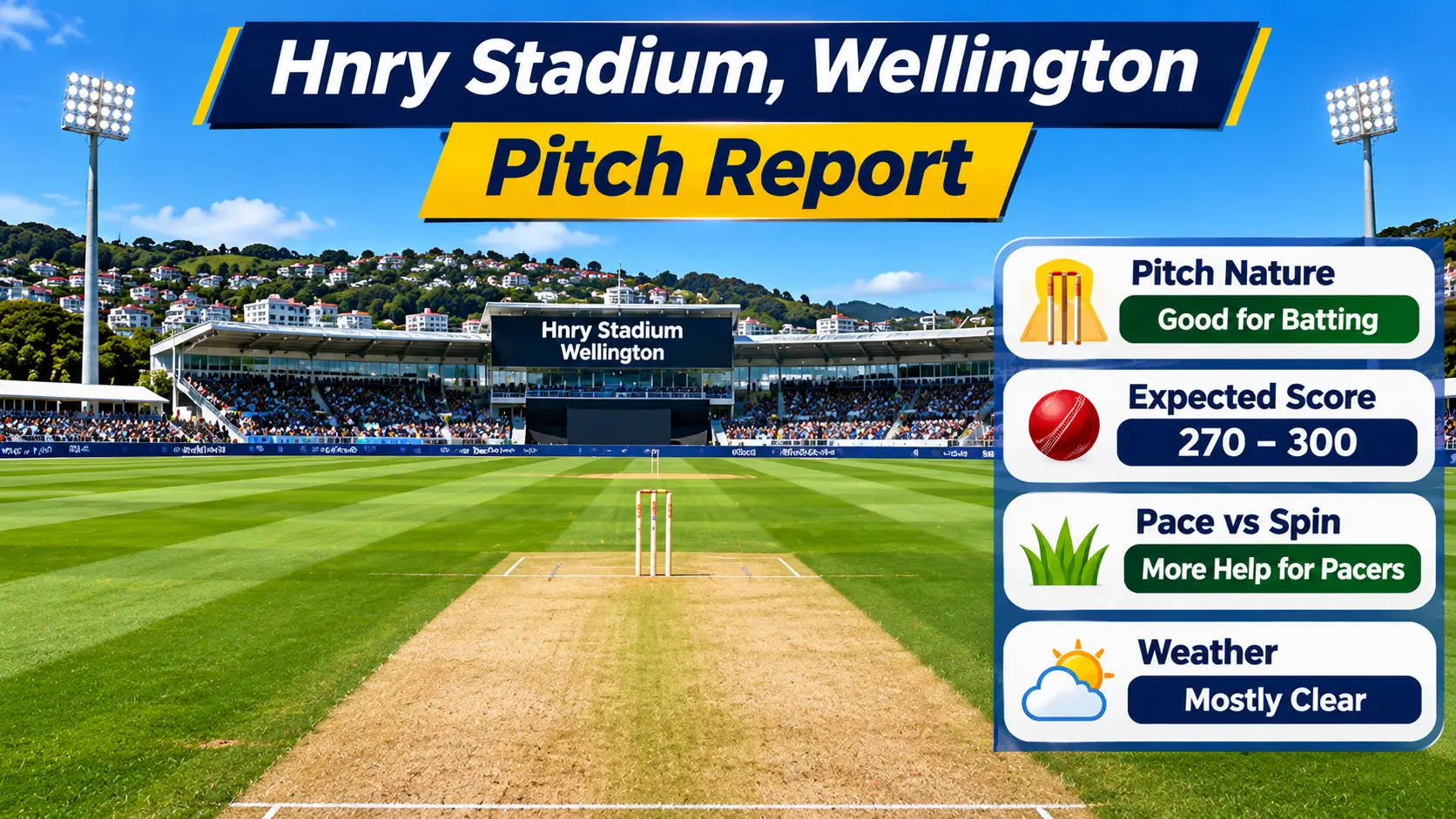
Hnry Stadium, also known as the Cake Tin, has a drop-in pitch and a history of producing competitive ODI totals. Venue records list an average first-innings score of about 232. The highest ODI total recorded there is 393 for six, made by New Zealand against the West Indies.
The surface can offer good value for shots once batters settle. New Zealand conditions can also help seamers with the new ball. Bowlers who hit a consistent length and vary their pace can make scoring difficult.
Wellington’s wind can affect high catches, lofted shots and bowling control. Teams must judge the conditions carefully rather than focus only on the pitch.
Venue records show a fairly even split in completed results: teams batting first have won 16 matches, while teams bowling first have won 14. That record does not point strongly towards one toss decision. The best choice will depend on the surface, cloud cover and wind on match day.
ODI results at Hnry Stadium
Wins in matches with a result, based on the venue record.
Source: Cricbuzz venue ODI statistics. The two figures represent 30 decided matches in the listed record.
A first-innings score of around 250 could be competitive, while 280 may offer stronger protection on a good batting surface. These are estimates, not guaranteed scoring ranges.
Rain can also affect play in Wellington. No firm match-day weather claim is included here because a reliable forecast can change closer to the start. Fans should check an updated local forecast before the toss. If rain interrupts play, the DLS method could again become important.
Team form and head-to-head record
India enter this match after winning the first ODI and taking the five-match T20I series 3–2. The opener also gave confidence to their bowling group and middle order.
New Zealand won the final two T20Is, including a big victory at Eden Park, but could not carry that momentum into the ODI opener. They need to turn individual starts into a complete team innings.
India have the stronger overall ODI record. The ICC lists 63 wins for India and 52 for New Zealand, with one tie and seven no-results. History provides context, but does not decide this match.
New Zealand can trouble India with disciplined seam bowling, but India’s experienced batters can handle pressure. Control of the first ten overs and middle phase may decide the contest.
For the official fixture listing and match updates, use the BCCI New Zealand vs India second ODI match page. The match-day playing XIs will only become final after the toss.
Probable playing XI for NZ vs IND 2nd ODI
The following combinations are predictions based on the squads and the first ODI. They are not confirmed teams. Final selections may change because of fitness, workload management, pitch conditions or the team balance chosen by each captain.
New Zealand probable XI
Will Young, Tim Seifert, Henry Nicholls, Daryl Mitchell, Tom Latham (wk), Glenn Phillips, Mitchell Santner (c), Nathan Smith, Kyle Jamieson, Jacob Duffy and Blair Tickner.
New Zealand need their top order to provide a platform. Seifert can score quickly, while Young and Nicholls offer stability. Mitchell, Phillips and Latham must turn starts into a substantial middle-order stand.
Santner offers spin control and useful runs. Jamieson, Duffy, Tickner and Nathan Smith give the hosts seam options. They must use the new ball well and deny Kohli and Gill easy scoring chances.
India probable XI
Rohit Sharma, Shubman Gill (c), Virat Kohli, Shreyas Iyer, KL Rahul (wk), Naman Dhir, Axar Patel, Anshul Kamboj, Gurnoor Brar, Arshdeep Singh and Auqib Nabi.
India may prefer continuity after winning the opener. Rohit and Gill can start quickly, while Kohli and Iyer bring middle-order experience. Rahul adds a reliable wicketkeeping option.
Axar adds balance with spin and lower-order batting. Kamboj and Brar impressed in the opener, while Arshdeep offers a left-arm new-ball option. Conditions and workload may shape the final attack.
India’s squad for the first three ODIs includes the main players listed above. Prasidh Krishna was ruled out of the series with a hamstring injury. New Zealand are without Rachin Ravindra and Mark Chapman for the ODI series, while the availability of players returning from fitness concerns should be checked near match time.
Key players who could decide the match
Virat Kohli – India’s batting anchor
Kohli’s 74 in the opener was the clearest batting statement. If he gets through the opening spell, he can manage a chase or build a strong total.
Shubman Gill – India’s captain and top-order key
Gill’s 37 and partnership with Kohli gave India control. He will want a longer innings in Wellington and remains central to India’s batting plan.
Arshdeep Singh – India’s new-ball threat
Arshdeep took four wickets in Auckland. His swing and left-arm angle can challenge New Zealand early and create pressure before the hosts settle.
Daryl Mitchell – New Zealand’s dependable batter
Mitchell made 28 in the opener. New Zealand need this key middle-order batter to stay in and build a partnership with Latham or Phillips.
Glenn Phillips – the momentum player
Phillips can change the pace with powerful hitting. After making 30 from 51 balls in the opener, he will look to score more freely and contribute in the field.
Jacob Duffy – New Zealand’s wicket-taking option
Duffy took three wickets in the opener, including Kohli’s. New Zealand need his movement and accuracy to keep taking wickets without leaking runs.
Key battles and match-winning factors
Arshdeep Singh vs New Zealand’s openers: The first ten overs could set the tone. If Arshdeep removes one or two top-order batters, India can put pressure on the middle order. New Zealand must leave well, rotate strike and avoid risky shots early.
Kohli and Gill vs the New Zealand seamers: Duffy, Jamieson and Tickner will try to create chances with movement and disciplined lengths. India will aim to avoid another early collapse and build a partnership. The contest between the experienced batters and the home attack could decide the chase.
Mitchell and Phillips vs India’s middle overs: New Zealand need at least one of these batters to play a long innings. Axar and India’s seamers will try to slow the scoring and force mistakes. If the hosts reach the final ten overs with wickets in hand, they can add valuable runs.
Fielding and running between wickets: The first ODI included a run-out that hurt New Zealand. Both teams must protect their wickets through sharp calling and safe running. A dropped catch or a missed run-out chance can be costly in a close ODI.
The toss and weather: The toss may influence the decision, but venue history shows no major gap between batting first and bowling first. Captains should assess the live conditions. A revised target under DLS could change the required scoring rate quickly if rain arrives.
Final prediction: New Zealand vs India 2nd ODI

India are our pick to win and take a 2-0 lead. Their first-match performance showed better control, and they have a strong top order with several bowling options.
New Zealand have a chance if their batters show more patience. A score above 260 would give their bowlers a better chance, especially if the new ball moves.
India must take early wickets and build around Gill or Kohli. New Zealand need to attack the new ball, protect wickets and make the most of the final overs.
India to win
India have the edge because of their first-ODI win, batting depth and bowling performance. New Zealand remain a serious threat on home ground.
This is a cricket prediction, not a certainty. The toss, final playing XIs, weather and match-day pitch can change the balance. Always check confirmed team news before the first ball.
Frequently Asked Questions
1. When is the New Zealand vs India 2nd ODI?
The second ODI is scheduled for Saturday, 7 November 2026. The match is set to begin at 7:30 AM IST, which is 3:00 PM local time in Wellington.
2. Where will the NZ vs IND 2nd ODI be played?
The match will be played at Hnry Stadium in Wellington, New Zealand. The venue is also known as the Cake Tin.
3. Who won the first ODI between New Zealand and India?
India won the first ODI by five wickets under the DLS method. New Zealand scored 185, and India reached the revised target of 143 in 22.4 overs.
4. Who is the favourite to win the second ODI?
India are favourites based on their first-match win, stronger batting depth and effective bowling display. New Zealand can challenge them if the home side produces a better batting performance.
5. What is a good score at Hnry Stadium in Wellington?
The venue’s average first-innings ODI score is around 232. A total near 250 can be competitive, while a score around 280 may provide stronger protection on a good batting surface. Conditions on the day will matter.
6. Are the playing XIs confirmed?
No. The teams listed in this article are probable line-ups, not confirmed XIs. The official playing XIs will be announced at the toss.
Conclusion
India want a 2-0 lead, while New Zealand need a response to keep the series alive. Home conditions could help the hosts, but India’s balance gives them the advantage.
Our final call is India to win the New Zealand vs India second ODI. A stronger New Zealand batting effort could make the contest close, but India have more reliable options across the batting and bowling departments.