
Cricket Analysis / ICC Rankings 2026
From historic World Cup victories to a deep bench of match-winners, explore the cricketing system behind India’s ODI and T20I performances—and the challenges that remain.
Statistical update: 23 October 2026 • Focus: ICC men’s ODI and T20I cricket
India’s white-ball cricket story is about far more than a handful of famous players. Aggressive batting, a broad talent pool, varied bowling options and a strong record in major events have made India one of international cricket’s most consistent limited-overs teams. The evidence stretches across different formats, venues and playing conditions. Yet recent results also show why dominance cannot be treated as permanent.
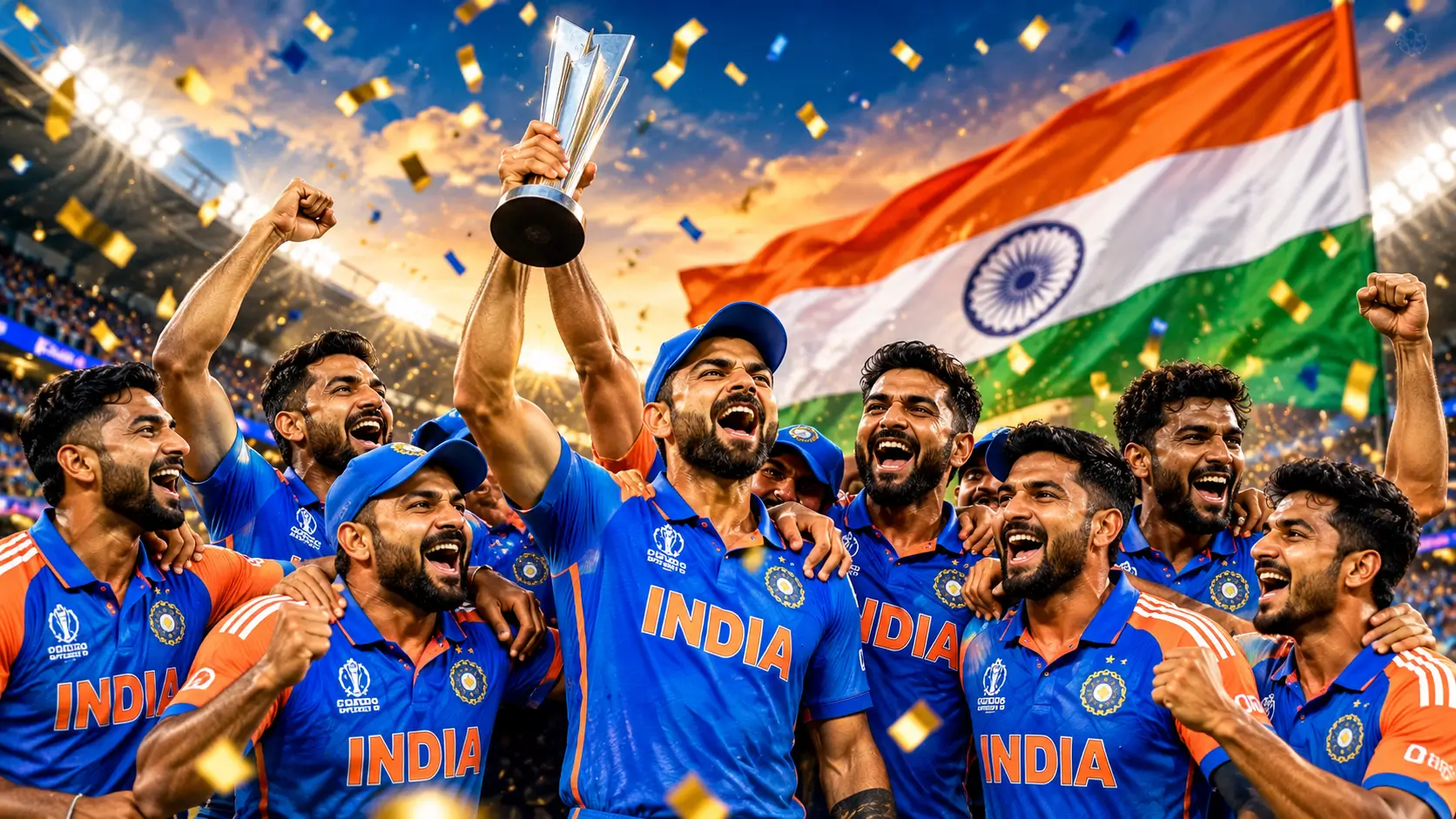
India won the 2024 Men’s T20 World Cup, lifted the 2025 Champions Trophy and defended the T20 World Cup in March 2026. At the time of this analysis, India hold first place in the ICC men’s ODI rankings but sit second in T20Is, just behind England. The contrast is important because a world title and a rankings lead measure different aspects of success. To understand India’s position, we need to examine the systems and decisions behind the results.
115 rating points
268 rating points
Quick answer: India succeeds in white-ball cricket because it combines high-quality players, IPL-backed development, flexible batting plans, specialist bowling, multi-skilled cricketers and big-match experience. Its three major ICC white-ball trophies between 2024 and 2026 show what those strengths can produce. However, England’s position above India in the latest T20I rankings shows that the competition remains close.
What Are India’s Latest ICC ODI and T20I Rankings?
India top the men’s ODI table with a rating of 115, ahead of New Zealand on 109. In the T20I standings, England lead with 269 while India follow on 268. These figures reflect the respective rankings updates available on 21–22 October 2026. They may change after subsequent international matches.
ICC Men’s ODI Team Rankings — October 2026
| Position | Team | Rating |
|---|---|---|
| 1 | India | 115 |
| 2 | New Zealand | 109 |
| 3 | South Africa | 104 |
| 4 | Pakistan | 103 |
| 5 | Australia | 102 |
Source: men’s ODI standings, 21–23 October 2026. Ratings are rounded ICC team ratings, not percentages. ICC Men’s T20I Team Rankings — 22 October 2026
| Position | Team | Rating |
|---|---|---|
| 1 | England | 269 |
| 2 | India | 268 |
| 3 | Australia | 260 |
| 4 | New Zealand | 246 |
| 5 | South Africa | 243 |
Source: published men’s T20I team standings, updated 22 October 2026. View the ICC T20I rankings.
Chart 1: ODI Team Ratings
October 2026 · Horizontal scale: 0–120 rating points
Chart 2: T20I Team Ratings
22 October 2026 · Horizontal scale: 0–280 rating points
How Do ICC Team Rankings Work?
ICC team rankings use a rating system rather than a straightforward count of victories. Broadly, a team’s rating comes from the ranking points it earns divided by the weighted match total used in the calculation. Results against opponents of different strength affect the points awarded, while scheduled annual updates alter the period of results considered. As a result, one tournament victory does not automatically guarantee first place.
The ranking also differs from the ICC player rankings, which assess individual cricketers. ODI and T20I teams have separate tables because their schedules and results are assessed independently. This explains why India can lead one format while England lead the other. This provides the methodology and annual-update framework.
How India Built Its Recent White-Ball Success
India’s current standing did not appear overnight. The side played dominant cricket for much of the 2023 ODI World Cup but lost the final to Australia in Ahmedabad. That disappointment was followed by a sequence of international trophies which changed how India’s white-ball teams were viewed. Each event also highlighted a different skill: tactical patience, attacking batting or pressure bowling.
- 2023 — ODI World Cup runners-upIndia won all nine league matches and their semi-final before Australia won the final.
- 29 June 2024 — Men’s T20 World Cup championsIndia beat South Africa by seven runs in Barbados after posting 176/7.
- 9 March 2025 — Champions Trophy winnersIndia chased New Zealand’s 251/7, reaching 254/6 to win by four wickets in Dubai.
- 8 March 2026 — Men’s T20 World Cup champions againIndia scored 255/5 and bowled New Zealand out for 159 to win the Ahmedabad final by 96 runs.
The 2026 final was historically significant. India became the first men’s side to retain the T20 World Cup and the first to win three editions, following 2007 and 2024. Their total of 255/5 was the highest in a men’s T20 World Cup final. According to the ICC’s official final report, India’s batters set up the win before the bowlers finished it.
Seven Reasons Behind India’s White-Ball Cricket Dominance
1 An Exceptional Pool of International Talent
India’s first advantage is choice. A large domestic cricket structure provides different batting, bowling and fielding profiles, allowing selectors to build combinations for specific formats. Competition for places also encourages players to improve even when they are outside the starting eleven. A squad built around several viable options is less dependent on one individual staying in form.
India’s 2026 T20 World Cup is a strong example of this flexibility. Sanju Samson began the competition outside the first-choice eleven but returned and became Player of the Tournament. The ICC recorded 321 runs from five innings for him, including 89 in the final. His progress showed why a strong reserve group can matter as much as a powerful first-choice line-up.
Depth is not an automatic guarantee, however. New players still have to adapt to international pace, pressure and changing conditions. India’s advantage lies in having several possible responses to poor form or injury rather than depending upon a single replacement. Sustaining that advantage requires clear selections and well-defined roles.
2 IPL Experience Helps Develop White-Ball Players
The Indian Premier League places emerging players alongside experienced international cricketers. Young batters face high-quality spin and pace, while bowlers regularly defend difficult totals before large crowds. Franchise cricket also creates opportunities to practise powerplay hitting, middle-over variations and death-over execution. These situations closely resemble the tactical challenges of international T20Is.
Its influence extends beyond six-hitting. Players learn how to adapt to different pitches, communicate during tense overs and study opposition match-ups. The visibility of the IPL can help national selectors identify skills suited to specific positions. That makes it an important part of India’s white-ball development pipeline, although domestic competitions and coaching systems also contribute.
IPL form should not be confused with proven international ability. T20 leagues use different team combinations, overseas-player limits and competitive pressures. Nor does IPL experience automatically translate to the 50-over game, where innings management matters more. India benefit most when league performance is combined with wider domestic evidence and international experience.
3 An Aggressive, Adaptable Batting Approach
India’s T20 batting has moved towards greater intent throughout the innings. Instead of relying only on a cautious start followed by a late surge, players are encouraged to attack when the conditions and match situation permit. That can put bowlers under pressure early and force captains to change plans. The best versions of this approach still recognise when wickets need protecting.
The 2026 World Cup final illustrated how destructive the method can be. India scored 92 runs in the six-over powerplay against New Zealand and eventually finished on 255/5. Sanju Samson made 89 off 46 balls, Abhishek Sharma hit 52 off 21 and Ishan Kishan contributed 54 off 25. These contributions came from different batters rather than one extraordinary innings carrying the entire total.
ODI cricket demands a different balance. Batters such as Shubman Gill, Virat Kohli and Rohit Sharma offer contrasting methods for accumulating runs and changing tempo. The ICC’s September 2026 ODI batting update had Gill first and Kohli close behind, highlighting India’s strength in that format. The wider lesson is adaptability: an effective team does not copy the same T20 strategy into every fifty-over match.
4 Bowling Options for Every Phase of the Game
Successful white-ball sides need more than a collection of wicket-takers. They need plans for the first six overs, strategies that restrict scoring in the middle and bowlers able to defend totals late. India’s mix of seam, swing and spin offers those different options. Captains can change pace and angle rather than repeating the same bowling pattern.
Jasprit Bumrah is a particularly important example because of his control and ability to take wickets in high-pressure situations. In the 2026 T20 World Cup final, he returned 4/15 from four overs. Axar Patel added 3/27, showing how pace and spin can work together to end a chase. Bowling performances like these turn a powerful batting total into a match-winning result.
The challenge is availability and consistency. When leading bowlers are injured or rested, replacements must deliver similar discipline without identical skills. Conditions overseas can also make spin less effective or require different lengths from fast bowlers. India remain strongest when roles are selected for the surface rather than reputations alone.
5 All-Rounders Create Tactical Freedom
All-rounders help a captain solve several problems at once. A player who can bowl useful overs and score quickly expands the possible balance between specialist batters and bowlers. India have benefited from the contrasting abilities of Hardik Pandya, Axar Patel and other multi-skilled players. Their presence can also reduce the risk of a weak lower order.
Hardik’s seam bowling and power hitting offer one kind of balance, while Axar’s spin and batting provide another. Against New Zealand in the 2026 final, Axar’s three wickets demonstrated how an all-rounder can influence the game without a major batting contribution. Such roles create more room for tactical substitutions in the bowling plan. They also make the side less predictable for opponents.
The difficulty is balancing workload and expectations. Players asked to cover two disciplines must maintain fitness and form in both. A shortage of genuine bowling options cannot always be disguised by part-time overs. India’s strongest combinations give all-rounders clear responsibilities instead of expecting them to compensate for every weakness.
6 Leadership, Coaching and Defined Roles
Team culture becomes especially important when talented players compete for limited places. Clear instructions allow batters to understand when to take risks and bowlers to know which phases they will handle. India have developed different combinations under different captains and coaches. The principle connecting successful teams is that individual talent must fit a collective plan.
Suryakumar Yadav captained India to the 2026 T20 World Cup title, with Gautam Gambhir as head coach. Their campaign showed that a settled approach can coexist with changes in the playing eleven. Ricky Ponting highlighted the importance of how leadership manages players, particularly around Samson’s inclusion. Trust and communication matter because even leading players experience periods of poor form.
Leadership is also tested after defeats. Changing a lineup too frequently can make it difficult for players to establish roles, while refusing to adapt can preserve a flawed strategy. Successful coaching finds a balance between consistency and accountability. That balance remains central to India’s future progress.
7 Experience of ICC Knockout Cricket
International tournaments put special pressure on decision-making. A single poor spell or short batting collapse can end months of preparation. India have reached major finals repeatedly, giving different generations experience of the atmosphere and demands. Familiarity does not remove nerves, but it can improve preparation for them.
The 2024 T20 World Cup final required India to defend 176/7 against South Africa and survive a tense finish. The 2025 Champions Trophy demanded a controlled chase of 252 against New Zealand. The 2026 T20 final presented a contrasting task: establish a huge target, then take early wickets. Winning through several different match situations suggests a wider range of strengths than simply batting first on flat pitches.
There is also a valuable lesson from failure. India were beaten in the 2023 ODI World Cup final despite an exceptional campaign beforehand. Reaching a final creates an opportunity, not an entitlement to a trophy. The strongest indicator of sustained success is the ability to prepare, adjust and recover across several tournaments.
India’s 2026 T20 World Cup Final: A Statistical Snapshot
India’s victory over New Zealand in Ahmedabad offers a compact example of their white-ball strengths. The opening pair attacked, the next batter maintained the tempo and the lower order accelerated at the finish. When New Zealand chased, wickets from both seamers and spinners ended the contest. It was a convincing performance across both innings rather than only one decisive individual contribution.
| Statistic | India / performer | Result |
|---|---|---|
| India innings | 20 overs | 255/5 |
| New Zealand innings | 19 overs | 159 all out |
| Winning margin | India | 96 runs |
| Powerplay score | India, first six overs | 92 runs |
| Highest individual score | Sanju Samson | 89 off 46 balls |
| Other leading scores | Abhishek Sharma / Ishan Kishan | 52 off 21 / 54 off 25 |
| Leading bowling figures | Jasprit Bumrah / Axar Patel | 4/15 / 3/27 |
Source: ICC official 2026 final scorecard and match report. The powerplay represents India’s first six batting overs.
Samson was named Player of the Tournament, while Bumrah collected the final’s Player of the Match award. These honours recognise different types of contributions over different periods. A complete assessment of India therefore needs both tournament-long consistency and performances in the most important match. That is also why team rankings should be evaluated alongside, not replaced by, title counts.
Why Are India’s ODI and T20I Strengths Different?
ODI and T20I cricket share many skills, but they reward them differently. In a fifty-over match, teams have time to rebuild after losing wickets and must often manage a long middle phase. T20Is offer fewer deliveries, which increases the value of quick scoring and specialised overs. India’s two squads can therefore be strong for different reasons.
ODI Cricket
No. 1, 115 rating India’s ODI strength lies in innings management, experienced top-order batting, strategic partnerships and sustained bowling plans over fifty overs. Building a chase and controlling the middle overs can be as important as a rapid start.
T20I Cricket
No. 2, 268 rating India’s T20I strengths include powerplay acceleration, multi-skilled players, boundary-hitting depth and bowling plans for short spells. The narrower format magnifies the cost of one expensive over or batting collapse.
The ICC ratings make the comparison concrete but not interchangeable. An ODI rating of 115 does not mean India are weaker than a T20I team rated 268. The scales come from separate competitions, match histories and calculations. Only teams within the same ranking table can be compared directly using those figures.
How Does India Compare with England, Australia and New Zealand?
England are India’s closest T20I ranking rival in October 2026, leading by a single rating point. Australia follow in third, while New Zealand remain among the leading contenders in both limited-overs formats. Such narrow differences show how quickly the order can change when strong teams meet. A single position in the table should not be mistaken for a large gulf in playing ability.
India’s ODI lead is clearer at six rating points over second-placed New Zealand. However, that advantage is not impossible to overturn, and international schedules are never identical. Different opponents, conditions and numbers of matches affect the ranking process. The strongest claim supported by the data is that India remain an ODI leader and a leading T20I contender—not that they are unbeatable.
New Zealand offer an instructive comparison because India defeated them in the 2025 Champions Trophy and the 2026 T20 World Cup finals. England provide the opposite lesson, having decisively outplayed India in the July 2026 T20I series. Australia remain a major reference point because of their success against India in the 2023 ODI World Cup final. Together, these results underline the importance of examining both long-term records and individual contests.
What Are India’s Biggest White-Ball Cricket Challenges?
Recent Bilateral Results Show the Limits of Dominance
India’s disappointing tour of England in July 2026 showed that past trophies do not protect a side from current weaknesses. England won all four completed T20Is after the opener was abandoned, including a 125-run victory at Nottingham. England also won the three-match ODI series 2–1. Those defeats provide an essential counterweight to the triumphs earlier in the year.
The October 2026 five-match T20I series against West Indies finished 2–2 after the fifth game was abandoned. This is another reminder that international performances can vary sharply across a season. A ranking usually reflects a broader period than the latest match, so it may stay high while problems are emerging. Good analysis must consider both the rating and the recent trend.
Finding the Right Balance in Different Conditions
Overseas cricket exposes technical and tactical differences. Extra swing can test attacking openers, while bouncy pitches can demand new batting methods and bowling lengths. Slow surfaces may require a different balance of seamers and spinners. India must continue selecting for the conditions instead of relying on a single preferred eleven.
The aggressive batting model also carries risk. When several batters attack simultaneously, early wickets can leave the middle order with little time to recover. A strong team should know when to preserve wickets without abandoning intent. The best white-ball systems offer more than one path to a competitive total.
Workload, Fitness and Squad Continuity
India’s players face a demanding calendar involving domestic cricket, international series and the IPL. Managing workload is therefore relevant to the availability of leading batters, all-rounders and fast bowlers. Rotation creates chances for replacements but can interrupt established combinations. The long-term challenge is retaining both freshness and familiarity.
Can India Maintain Its White-Ball Cricket Success?
India have the player pool and recent tournament record to remain competitive, but no ranking position can be guaranteed. The 2027 ODI World Cup will test how well India can translate sustained ODI form into another major event. Between now and then, bilateral matches provide opportunities to refine combinations, identify weaknesses and build adaptability. Success will depend on how effectively the side responds to setbacks, not only how it celebrates victories, as per Cricket Experts.
Three questions are particularly important. Can India maintain its ODI batting depth through changes in personnel? Can its T20I team solve the issues exposed by England without losing its attacking identity? And can the bowlers stay effective on surfaces where familiar plans are less useful? The answers will determine whether the present period becomes a lasting standard.
Frequently Asked Questions
1. Is India currently No. 1 in both ICC white-ball rankings?
No. As of the October 2026 updates used here, India are first in the men’s ODI rankings with 115 rating points and second in T20Is with 268. England lead the T20I table with 269.
2. Why is India so successful in ODI cricket?
India combine experienced batting, deep squads, varied bowling and the ability to manage fifty-over innings. Their recent Champions Trophy win and leading ODI ranking illustrate those strengths.
3. How many Men’s T20 World Cups has India won?
India have won three Men’s T20 World Cup titles, in 2007, 2024 and 2026. The 2026 triumph made them the first men’s team to defend the title successfully.
4. Who won the 2026 Men’s T20 World Cup?
India beat New Zealand by 96 runs in the final on 8 March 2026 in Ahmedabad. India made 255/5 and bowled New Zealand out for 159.
5. How does the IPL help the Indian cricket team?
The IPL provides high-pressure T20 experience, exposure to international players and opportunities to develop specialist skills. Selection for India still requires assessment beyond league performances.
6. What is the difference between an ICC ranking and a World Cup title?
A World Cup title goes to the winner of a particular tournament. ICC team rankings are calculated using a wider set of weighted international results and are updated over time.
7. Who were India’s leading performers in the 2026 T20 World Cup final?
Sanju Samson struck 89 from 46 balls, while Abhishek Sharma and Ishan Kishan made quick half-centuries. Jasprit Bumrah took 4/15 and Axar Patel claimed 3/27.
8. Why is England above India in the October 2026 T20I rankings?
England’s recent results, including a convincing series win over India in July, helped it move ahead. The published October table shows England one rating point above India.
9. What is India’s biggest white-ball cricket weakness?
No single weakness explains every defeat. Recent matches have highlighted the need for reliable bowling execution, batting adaptability and well-balanced team combinations, especially in unfamiliar conditions.
10. Can India stay No. 1 in the ODI rankings until the 2027 World Cup?
That is possible but not assured. India’s position will depend on future results, the performance of rival teams and scheduled ICC ranking updates.
Conclusion
India’s recent white-ball success rests on a powerful combination of talent, preparation, tactical flexibility and tournament experience. Winning the 2024 and 2026 T20 World Cups and the 2025 Champions Trophy shows how effectively those strengths can come together. Yet the current T20I table and recent bilateral defeats reveal genuine competition and areas to improve. India are a leading white-ball side in 2026 because of their sustained achievements—not because their success is automatic or their rankings are untouchable.